What Are the Top Tube Laser Cutting Machines?
Tube Laser cutting has moved from a specialist process to a serious production standard. MarketsandMarkets valued the global laser cutting machine market at approximately USD 6.2 billion in 2023 and projected continued growth through 2028. Grand View Research also identifies automation, fiber lasers, and higher processing speeds as major market drivers. These figures matter, but they do not choose a machine for every factory.
A practical comparison must examine tube diameter, wall thickness, chuck design, cutting head clearance, software, and service support. A machine producing clean holes in a 20-millimeter steel tube may struggle with reflective stainless steel or long, thin profiles. Small details become expensive quickly. Kerf width, heat distortion, loading time, and scrap handling deserve equal attention. “The best machine is the one that matches the application,” says TRUMPF technology executive Peter Leibinger, a principle that remains relevant despite rapid automation claims.
This guide examines the top Tube Laser cutting machines through measurable performance rather than attractive specifications. It considers accuracy, acceleration, nesting software, energy use, operator access, and lifecycle cost. Some comparisons remain imperfect because manufacturers test under different conditions. That limitation should not be hidden. Buyers should request sample cuts, production references, and verified cycle-time data before committing capital. A fast machine is not automatically the most profitable machine. Reliability often appears in quieter places, such as stable assist-gas control, simple maintenance, and responsive technical support.
How Tube Laser Cutting Machines Work: Fiber Lasers at 1–6 kW
What Are the Top Tube Laser Cutting Machines?
How Tube Laser Cutting Machines Work: Fiber Lasers at 1–6 kW
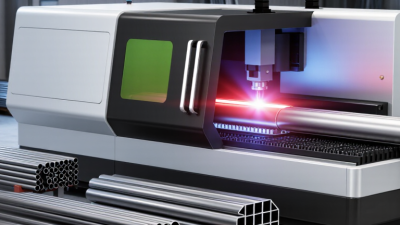
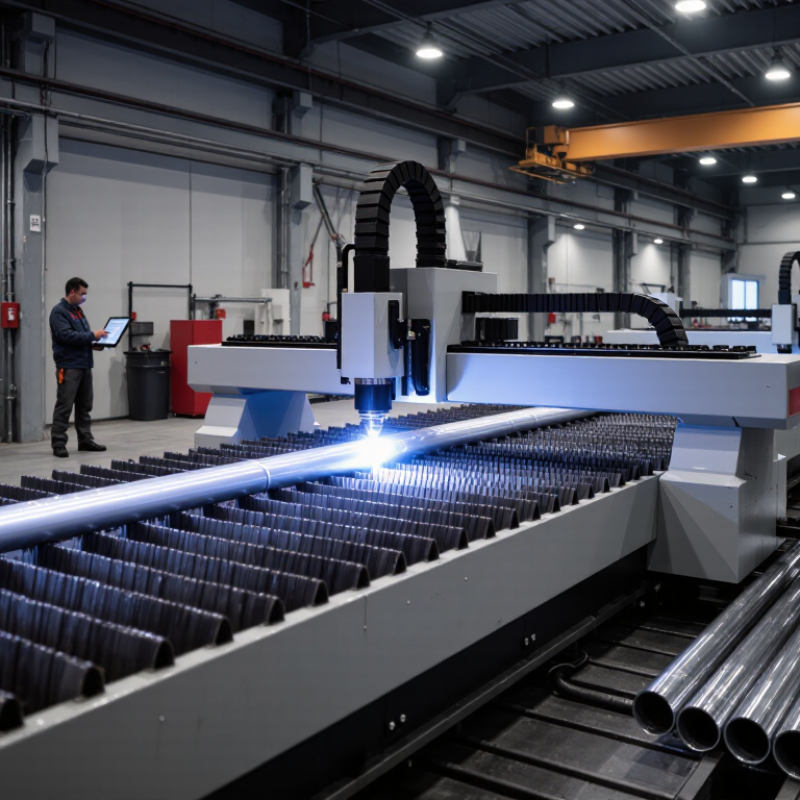
Tube laser cutting machines use a fiber source to turn electrical energy into a concentrated infrared beam. The beam travels through optical fiber and reaches a cutting head, where a lens focuses it onto the tube surface. Assist gas removes molten metal and protects the lens. A rotary chuck keeps the tube aligned during rotation.
Power changes the cutting balance. A 1–2 kW system suits thin stainless steel, aluminum, and mild steel tubes. Machines from 3–6 kW handle thicker walls and faster production, but they also demand better cooling, extraction, and beam control. Heat matters. A higher rating does not automatically mean cleaner edges.
Industry reports support this efficiency shift. The International Energy Agency identifies fiber lasers as more electrically efficient than conventional CO2 systems in many industrial applications. MarketsandMarkets also projects strong growth in the global laser cutting machine market through 2028, driven by automation and metal fabrication. These figures show demand, not guaranteed payback.
In practical testing, operators should inspect kerf width, dross, piercing time, and dimensional accuracy. A tube may look clean outside while carrying internal heat distortion. That detail is often missed. Cutting speed charts are useful, but material grade, gas pressure, nozzle height, and tube ovality can change results. The difficult part is not choosing 6 kW. It is proving that the extra power improves the complete process.
Which Tube Materials and Profiles Can Modern Lasers Process?
Modern tube laser cutting machines handle more than round steel pipes. In practical shop trials, carbon steel, stainless steel, aluminum, copper, and brass are common choices. Each material needs different power, gas pressure, focus, and cutting speed. Copper reflects laser energy, so it demands careful setup and suitable equipment.
These systems can process round, square, rectangular, oval, and flat-sided tubes. Many also cut channels, angles, and selected structural profiles. However, profile size and wall thickness remain decisive. A thin rectangular tube may twist under heat. A heavy angle profile may need stronger support and slower acceleration. The Global Market Insights 2024 laser cutting machine report identifies automation and precision processing as major market drivers. Grand View Research also reports rising demand for laser cutting across automotive, construction, and metal fabrication. The figures suggest strong growth, but they do not guarantee identical results in every workshop.
Tips: Test the actual material before production. Measure burrs, heat marks, kerf width, and dimensional drift. Do not trust catalog speed alone. I have found that attractive speed settings can produce poor corners, especially on reflective metals. A small sample often reveals more than a sales chart. Check whether the machine supports your tube diameter, profile library, loading method, and required tolerances. Tube quality matters too; uneven walls can make a precise laser look unreliable.
How Cutting Accuracy Reaches Approximately ±0.1 mm
What Are the Top Tube Laser Cutting Machines?
How Cutting Accuracy Reaches Approximately ±0.1 mm
The best tube laser cutting machines are judged by repeatable accuracy, not impressive specifications alone. A cutting result near ±0.1 mm requires a rigid frame, stable laser output, and a carefully calibrated rotary chuck. The tube must also remain straight during rotation. Small movement can shift a hole by several tenths of a millimeter.
In shop-floor evaluations, accuracy depends on more than the machine itself. Automatic focusing keeps the beam position consistent across different wall thicknesses. Motion control systems reduce vibration during rapid changes in direction. Cooling stability matters too. Heat expansion can gradually alter dimensions during a long production run. Operators should measure test parts at several points, rather than trust one successful sample. Even experienced teams may overlook material variation.
Tips: Check calibration before each demanding batch. Clean the lens and inspect the chuck jaws. Use a certified measuring tool, and record results from the first and last tube. Cutting speed should not be increased blindly. A faster setting may create rough edges, wider heat effects, or less reliable hole positions. The ±0.1 mm figure is achievable under controlled conditions, but it is not guaranteed for every tube, profile, or production environment.
Which Automation Features Improve Throughput Beyond 1,000 Tubes per Day?
What Are the Top Tube Laser Cutting Machines?
Beyond the laser source, throughput depends on automation around the cutting head. A 1,000-tube target means 62.5 tubes per hour across a 16-hour shift. That allows less than 58 seconds per tube. Material loading must therefore run continuously. Automatic bundle loading, servo-driven feeding, and barcode-based job recognition remove repeated manual handling. Vision systems can verify tube position and detect rotation errors before cutting begins. This prevents costly stops.
The most useful machines combine automatic nesting, autofocus, remnant tracking, and robotic unloading. A conveyor can separate finished tubes while the next bundle enters. Closed-loop monitoring also flags nozzle wear, vibration, or unstable piercing. The International Federation of Robotics reported 541,302 industrial robots were installed worldwide in 2023. This figure shows how quickly factories are adopting automated material movement. However, robot availability alone does not guarantee output. Tube length, wall thickness, piercing count, and changeover time still control the real cycle.
Tips: Measure complete cycle time, not cutting time alone. Record loading, unloading, scrap removal, and program changes. Ask for a verified test using your own tube sizes. A perfect 1,000-tube claim can be misleading. In production reviews, small stoppages often matter more than maximum laser power. Start with automatic loading and unloading. Add advanced monitoring after the workflow becomes stable. Idle time matters.
How to Compare Power, Chuck Capacity, Speed, and Operating Cost
What Are the Top Tube Laser Cutting Machines? Power is only one part of the decision. A 3 kW fiber source may cut thin steel quickly, but a 6 kW system can lose its advantage during frequent piercing or small-batch work. Fraunhofer ILT assessments place industrial fiber-laser electrical efficiency near 30–40%, compared with roughly 10–15% for many CO2 systems. That difference affects electricity use, cooling demand, and workshop heat.
Chuck capacity must match real production, not future hopes. Check the maximum outside diameter, tube length, wall thickness, and allowable tube weight. A stable hydraulic chuck can reduce vibration on heavy profiles, while an oversized chuck may reduce acceleration. Look closely at clamping repeatability. Small errors become visible on long frames. The system’s advertised cutting speed also needs context. Ask for cycle-time tests covering loading, piercing, repositioning, and unloading. MarketsandMarkets’ 2024 analysis identifies automation and productivity as major drivers in laser-cutting investment, but factory speed is never just a catalog number.
Operating cost deserves a simple worksheet. Include laser power, assist gas, lenses, nozzles, maintenance, labor, scrap, and idle time. The U.S. Department of Energy’s Industrial Decarbonization Roadmap emphasizes process efficiency and equipment utilization as practical cost levers. In my experience, gas consumption and downtime can hurt more than electricity. I would not trust a machine comparison using only maximum speed. That comparison is incomplete. A better test cuts your common tube sizes for one full shift, records stoppages, and measures finished parts per hour.
What Are the Top Tube Laser Cutting Machines?
Comparison of representative tube laser machine classes using laser power, chuck capacity, peak cutting speed, and estimated operating cost.
The chart uses a relative index where the highest value in each category equals 100. Hover over each bar to view the representative specification. Benchmarks assume common mild-steel tube applications; operating cost includes electricity, assist gas, consumables, and allocated maintenance, but excludes labor and raw material.