Inquiry
Form loading...
China has become a major sourcing base for CO2 Laser Tube products used in cutting, engraving, marking, and fabrication equipment. Grand View Research’s Laser Technology Market report indicates strong global growth, supported by automation, electronics production, and industrial customization. That expansion creates opportunity for buyers. It also creates confusion.
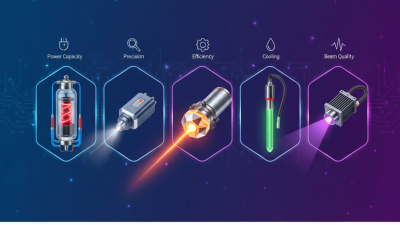
A quality Laser Tube is more than a wattage label. Buyers should examine rated power, optical mode, electrode design, cooling requirements, ignition stability, operating life, and replacement availability. A clear factory datasheet should show test conditions, not only attractive marketing claims. ISO 9001 certification can support process consistency, but it cannot replace independent product testing. Specifications matter.
Nobel Prize-winning laser physicist Arthur Schawlow once observed, “The laser is a solution looking for a problem.” His remark remains useful here. The cheapest tube may not suit a high-duty engraving line. A longer warranty may also hide strict operating conditions. Grand View Research and other industrial laser reports show market momentum, yet they do not validate every supplier.
This guide examines China’s leading Laser Tube manufacturers for global buyers. It considers factory experience, technical documentation, production capacity, quality controls, export support, and after-sales responsiveness. Practical details matter, including whether a supplier can provide stable samples and safe packaging for long-distance shipment. No ranking is perfect. Buyer requirements differ, and some factory claims require closer verification. That gap matters. The strongest sourcing decision combines reported data, technical testing, and direct communication with the manufacturer.
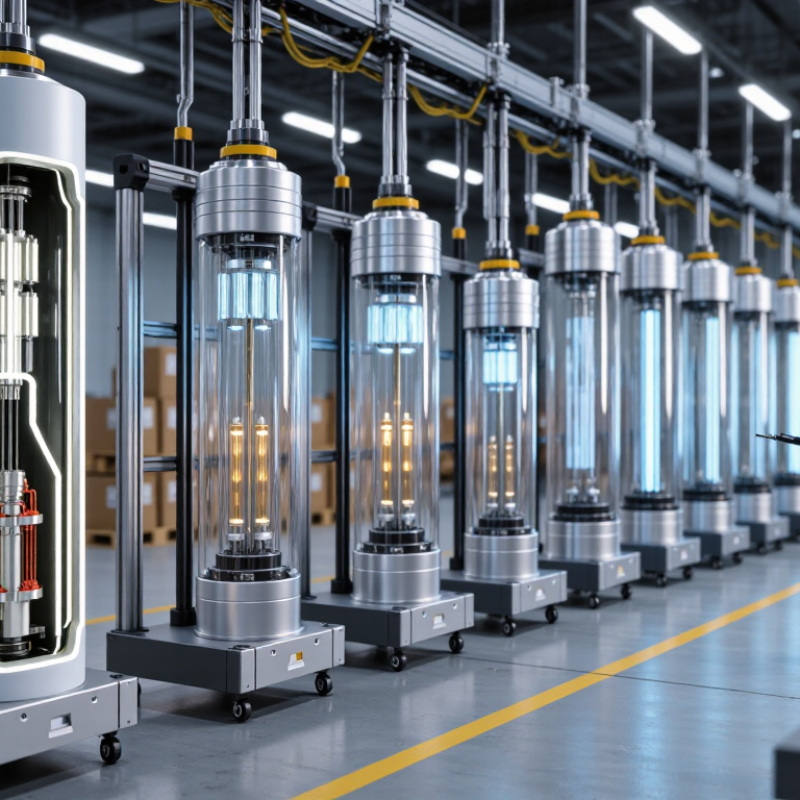
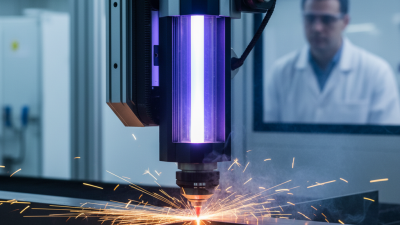
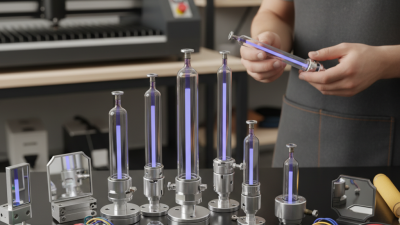
China’s laser tube manufacturing industry serves signage, cutting, engraving, medical research, and light industrial applications. Its scope includes glass tube production, electrode assembly, gas filling, sealing, testing, and export packaging. Many manufacturers support custom lengths, power ratings, cooling methods, and electrical connections for overseas equipment builders.
Product selection usually begins with tube type. CO2 laser tubes remain common for non-metal materials, including acrylic, wood, fabric, and paper. Buyers can also find tubes for engraving machines, compact cutters, and higher-duty industrial systems. Air-cooled designs simplify installation, while water-cooled models often suit longer operating periods. Output power, beam stability, working life, and operating voltage require careful comparison.
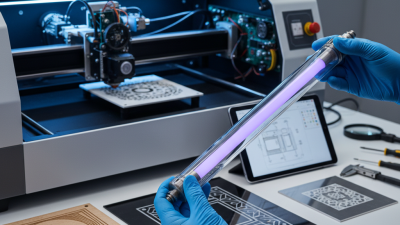
Factory experience matters. Skilled technicians inspect glass bodies for cracks, measure gas pressure, and test ignition consistency. Some suppliers record power decay during extended trials, which helps buyers assess practical service life. Documentation should include test conditions, installation guidance, and replacement recommendations. Details decide.
However, quality is not uniform across the market. A lower price may reflect shorter testing or less stable components. Even experienced buyers can overlook transport vibration, water quality, or incompatible power supplies. I have found that clear specifications prevent more problems than attractive promises. Requesting samples, batch records, and video inspections can reveal weaknesses before volume purchasing begins. Some production claims still need verification, especially when lifespan figures lack defined operating conditions.
| Product Category | Typical Technical Range | Core Manufacturing Scope in China | Common Applications | Important Buyer Specifications | Export and Quality Considerations |
|---|---|---|---|---|---|
| Sealed CO₂ Glass Laser Tubes | Typically 10–180 W for compact and mid-range engraving or cutting systems; infrared output at approximately 10.6 μm. | Glass-body forming, electrode assembly, gas filling, vacuum processing, optical alignment, water-cooling integration and end-of-line testing. | Non-metal engraving and cutting, acrylic, wood, paper, leather, fabric, rubber, glass marking and signage production. | Rated output power, physical length, outer diameter, cooling-water temperature, operating current, operating voltage, beam mode and mounting position. | Confirm electrical compatibility, water-cooling requirements, packaging protection, serial traceability, rated-life test method and replacement availability. |
| High-Power CO₂ Glass Laser Tubes | Commonly above 100 W and extending into several hundred watts for larger-format cutting equipment; usually water-cooled. | Large-diameter glass processing, resonator design, high-voltage electrode integration, cooling-channel design and power-stability testing. | Industrial sheet cutting, large-format engraving, foam and textile cutting, packaging materials and non-metal fabrication. | Continuous output, peak power, spot quality, discharge stability, cooling flow, tube dimensions, high-voltage requirements and installation clearance. | Request verified power curves rather than relying only on nominal wattage; inspect vibration resistance, coolant compatibility and transport packaging. |
| RF-Excited Metal CO₂ Laser Tubes | Typically used in industrial systems from tens of watts to several hundred watts; generally operate near 10.6 μm. | Metal resonator manufacturing, RF excitation integration, precision sealing, optical-window assembly, cooling design and factory calibration. | High-speed marking, precision engraving, plastics processing, coated-metal marking and automated production lines. | RF frequency and power interface, output stability, pulse response, beam quality, cooling method, mounting pattern and control communication. | Check compatibility with the RF power supply and controller; request optical-window protection, service instructions and documented acceptance-test results. |
| CO₂ Laser Tubes for Special Wavelengths | Specialized sealed-tube products may use wavelengths around 9.3–9.6 μm instead of the more common 10.6 μm output. | Gas-mixture control, wavelength-specific resonator design, optical coating selection and application-oriented output testing. | Selected polymer processing, thin-film cutting, medical-material processing and applications requiring lower absorption in particular materials. | Exact wavelength, output stability, pulse format, material absorption characteristics, lens transmission range and system optical alignment. | Treat wavelength as a system-level requirement; verify the cutting head, mirrors, lenses and protective windows are suitable for the selected wavelength. |
| Low-Power CO₂ Laser Tubes | Often below 60 W, with air-cooled or water-cooled configurations depending on the design and duty cycle. | Compact tube assembly, low-power discharge optimization, simplified cooling systems and integration with desktop equipment. | Desktop engraving, laboratory equipment, educational systems, small signage and light-duty craft processing. | Tube size, rated current, duty cycle, cooling requirements, ignition characteristics, beam alignment and compatible power supply. | Verify actual continuous-duty capability and thermal management; low-cost products should be evaluated for consistency between batches. |
| Fiber Laser Sources and Pump Modules | Typical industrial fiber-laser output is approximately 1.06–1.08 μm; power levels range from marking power to multi-kilowatt cutting power. | Pump-diode integration, fiber-coupling, gain-module assembly, beam-combining, thermal management and source-level testing. | Metal cutting, welding, annealing, deep engraving, marking, cleaning and precision material processing. | Rated power, wall-plug efficiency, beam parameter product, fiber-core diameter, connector type, modulation frequency, cooling and service life. | Confirm integration with the cutting head, controller and chiller; request power stability, alarm logic, operating-hour records and warranty conditions. |
| Ultraviolet and Green Solid-State Laser Modules | Common industrial wavelengths include approximately 355 nm ultraviolet and 532 nm green output, usually at lower power than metal-cutting fiber sources. | Diode pumping, nonlinear frequency conversion, crystal mounting, beam conditioning, thermal control and pulse-quality testing. | Fine marking, electronics, glass, ceramics, plastics, photovoltaic materials and heat-sensitive products. | Wavelength, pulse width, repetition rate, pulse energy, spot size, cooling method, beam quality and marking-field requirements. | Verify long-term pulse stability and thermal performance; optical components must be rated for the selected wavelength and pulse energy. |
| OEM and Customized Laser Tubes | Configuration depends on the machine design, including customized dimensions, terminals, cooling interfaces, output power and wavelength. | Engineering drawings, prototype production, sample approval, process validation, batch manufacturing, private-label packaging and replacement compatibility. | Machine builders, system integrators, replacement-parts programs, laboratory instruments and application-specific equipment. | Dimensional drawings, interface definitions, performance tolerance, minimum order quantity, sample lead time, batch consistency and change-control procedure. | Use a signed technical specification and sample approval record; clarify intellectual-property ownership, inspection rights and spare-parts support. |
| Key Manufacturing and Testing Capabilities | Capabilities vary by factory and product line; no single specification applies to every laser-tube producer. | Glass or metal body fabrication, vacuum and gas handling, electrode production, optical inspection, electrical testing, thermal testing and aging tests. | Supports consistent performance for cutting, engraving, marking, welding and other industrial laser systems. | Ask for test methods covering output power, mode quality, current-voltage behavior, cooling performance, leakage, insulation and operating stability. | ISO 9001, CE, RoHS and other claims must be verified for the specific product and shipment; certificates should match the legal manufacturer and model. |
| Global Buyer Evaluation Factors | Commercial suitability depends on technical compatibility, total cost of ownership and after-sales support rather than nominal power alone. | Supplier qualification, production capacity, incoming-material control, process documentation, final inspection and export packaging. | Applicable to replacement procurement, OEM integration, distributor programs and complete machine manufacturing. | Compare real output, service life, failure rate, lead time, minimum order quantity, warranty, technical response time and spare-parts policy. | For international orders, confirm HS classification with a customs professional, use shock-resistant packaging and define inspection, delivery and warranty terms in writing. |
Note: Technical ranges are representative industry ranges and can vary by design, operating conditions and manufacturer. Buyers should confirm final specifications through an approved technical datasheet and sample test.