Inquiry
Form loading...
Buying laser-cutting equipment across borders is not a simple price comparison. It requires practical judgment, technical knowledge, and careful supplier verification. A low quotation may hide limited service, unstable components, or unsuitable specifications.
Theodore Maiman, the laser inventor, once said, “The laser is a solution looking for a problem.” His words remain useful for global buyers. The right machine must solve a clear production need, not merely appear impressive in a catalog.
This guide examines ten Laser Cutting tips for international purchasing decisions. It considers material type, sheet thickness, laser source, cutting speed, accuracy, energy use, software, maintenance, training, and after-sales support. A 3 kW fiber laser may cut stainless steel efficiently, but it may be excessive for thin signage work. A cheaper model may also require costly replacement optics.
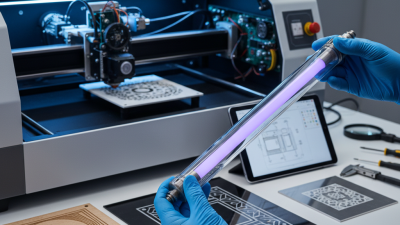
Look closely at real operating details. Ask for sample cuts on your own materials. Inspect edge quality, burr formation, kerf width, and heat marks. Request test videos with visible machine settings. Confirm whether the quoted price includes installation, shipping protection, spare lenses, and operator training.
Supplier claims need evidence.
Regional voltage, service response times, import procedures, and documentation can affect ownership. These details are easy to overlook. I would also question guarantees that promise extreme speed without defining material conditions.
No buying checklist is perfect. Production changes, material batches vary, and operator skill matters. However, disciplined comparisons can reduce avoidable risk and support a more reliable Laser Cutting investment.
10 Laser Cutting Tips for Global Buyers?
Understanding Laser Cutting Technologies and Their Best Applications
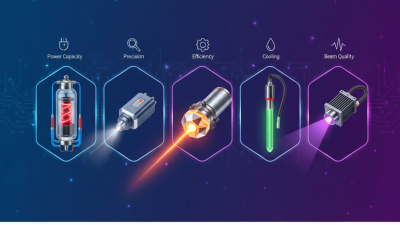
Global buyers should match the laser source to the material, thickness, and required finish. Fiber lasers suit steel, aluminum, and other reflective metals. CO2 lasers often perform well on wood, acrylic, textiles, and selected plastics. Diode systems can serve lighter materials, but their limits require careful testing. Material decides everything.
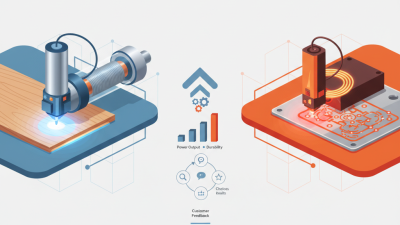
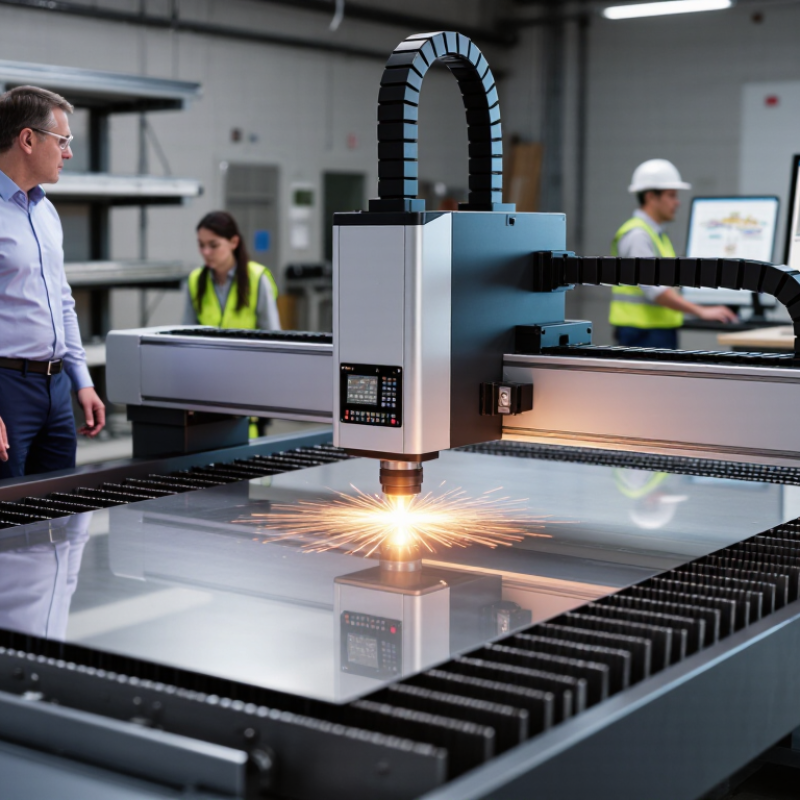
Check power, cutting speed, kerf width, and heat-affected zones before ordering equipment. Ask for sample cuts using your actual material and thickness. Inspect corners, small holes, burrs, and edge discoloration. Test the edge. A clean sample may still hide production problems when sheets vary between suppliers. Confirm bed size, autofocus accuracy, extraction performance, and software compatibility. These details affect daily output more than impressive power ratings.
Applications should guide the purchase. Sheet-metal workshops may need stable piercing and consistent hole quality. Sign makers may prioritize fine details and smooth acrylic edges. Furniture producers often need repeatable cuts across plywood panels. Confirm voltage, safety systems, operator training, spare parts, and service access in your region. In practice, no recommendation is perfect. Different materials behave unexpectedly, especially with coatings or internal stress. Keep a realistic trial schedule, record failed settings, and allow time for adjustment. Reliable buying decisions come from measured samples, clear specifications, and honest production targets.
| Tip | Technology | Typical Wavelength | Best-Suited Materials | Indicative Thickness Range* | Best Applications | Main Advantages | Key Buyer Check |
|---|---|---|---|---|---|---|---|
| 1 | Choose the laser source according to the material | Fiber: approximately 1.03–1.08 μm CO₂: approximately 9.3–10.6 μm |
Fiber: carbon steel, stainless steel, aluminum, brass and copper CO₂: acrylic, wood, textiles, plastics and non-metallic sheets |
Metals: about 0.5–25 mm depending on power Non-metals: about 0.5–25 mm depending on material |
Metal fabrication, signage, panels, machine parts and general sheet processing | Correct wavelength improves absorption, cutting speed and edge quality | Request cutting samples using the exact material grade and thickness you will process |
| 2 | Match power to production thickness | Continuous-wave fiber or CO₂ source | Carbon steel, stainless steel and aluminum for industrial cutting | Approximately 1–6 mm: lower-power systems Approximately 6–25 mm: higher-power systems |
Prototype work, medium-volume production and heavy plate cutting | Adequate power reduces slow cutting, excessive dross and repeated passes | Compare rated power with recommended thickness, not only the maximum advertised thickness |
| 3 | Prioritize fiber technology for reflective metals | Approximately 1.03–1.08 μm | Aluminum, copper, brass, stainless steel and coated metal | Commonly about 0.5–12 mm; thicker copper and aluminum require suitable power and process settings | Electrical components, heat exchangers, kitchen equipment and metal enclosures | High electrical-to-optical efficiency and strong absorption compared with longer-wavelength sources | Check reflected-light protection, piercing capability and approved cutting parameters for copper |
| 4 | Select CO₂ for non-metallic materials | Approximately 9.3–10.6 μm | Acrylic, wood, plywood, paper, leather, rubber and many textiles | Typically about 1–25 mm, depending on material density and machine power | Decorative panels, packaging, architectural models, furniture parts and signage | Efficient absorption by many organic and polymer-based materials | Verify whether the material releases hazardous fumes or corrosive by-products when heated |
| 5 | Use UV or short-pulse lasers for heat-sensitive work | UV: commonly about 355 nm Ultrashort pulse: often in the picosecond or femtosecond range |
Thin polymers, glass, ceramics, films, electronic materials and delicate coated parts | Usually thin sheets, films or precision components below approximately 3 mm | Microelectronics, medical components, precision marking and fine drilling | Small heat-affected zones and fine feature resolution | Measure burrs, discoloration, microcracks and dimensional accuracy under magnification |
| 6 | Check cutting-bed size and loading method | Not wavelength-dependent | Sheet metal, plates, acrylic panels, wood sheets and composite boards | Determined by bed dimensions and material handling capacity | Standard sheets, oversized panels, repeated batch cutting and automatic production lines | A suitable bed minimizes repositioning, setup time and material waste | Compare usable cutting area, maximum workpiece weight, pallet exchange and sheet-loading clearance |
| 7 | Evaluate speed together with acceleration | Fiber, CO₂ or other source selected for the material | Thin and medium-gauge sheet materials with frequent short contours | Often most beneficial below approximately 6 mm for high-speed sheet work | High-volume brackets, cabinets, panels and nested production batches | High acceleration can reduce cycle time on parts with many short moves | Ask for complete cycle-time data, including piercing, nozzle changes, loading and unloading |
| 8 | Confirm assist-gas compatibility and operating cost | Not wavelength-dependent | Carbon steel, stainless steel, aluminum and other process-specific materials | All thicknesses; gas selection becomes increasingly important as thickness rises | Clean stainless-steel edges, fast mild-steel cutting and oxidation-controlled parts | Oxygen can increase mild-steel cutting speed; nitrogen or air can reduce oxidation in suitable applications | Calculate gas purity, pressure, consumption, supply method and local refill availability |
| 9 | Verify accuracy, kerf and edge quality | Not wavelength-dependent | Precision metal parts, thin sheet, electronic components and assembled products | Typically thin to medium materials where tolerance and appearance are critical | Precision brackets, interlocking parts, covers and components requiring minimal finishing | A stable beam, rigid motion system and correct focus can produce narrow kerfs and low dross | Specify tolerance, perpendicularity, roughness, dross limits and test-part inspection method |
| 10 | Assess safety, compliance and after-sales support | Depends on the selected source and enclosure design | All materials and production environments | All thicknesses and machine configurations | Export production, regulated facilities, educational labs and continuous manufacturing | Improves operator protection, machine uptime and long-term ownership value | Review enclosure classification, interlocks, emergency stops, fume extraction, electrical requirements, training and spare-part lead times |
*Thickness ranges are indicative industry-use ranges rather than guaranteed specifications. Actual results depend on laser power, material grade, reflectivity, thermal properties, assist gas, nozzle, focus, cutting speed and required edge quality.