How to Choose the Best CO2 Laser Lamp for Your Needs?
Choosing the right CO2 Laser Lamp can be a daunting task. The market is full of options that promise different outcomes. Each type of CO2 Laser Lamp offers unique features. It is crucial to match those features with your specific needs.
According to Dr. Emily Carter, a renowned expert in laser technologies, "Selecting a CO2 Laser Lamp requires understanding both your goals and the technology behind it." Her insights underline the importance of informed choices. Different applications demand different power levels and wavelengths. It's not only about the price but also about longevity and reliability.
Many users overlook these details. They may buy a CO2 Laser Lamp without deep research. This often leads to regrets later. Investing time in understanding specifications can prevent costly mistakes. It's essential to prioritize quality and performance over flashy marketing claims.
Factors to Consider When Choosing a CO2 Laser Lamp
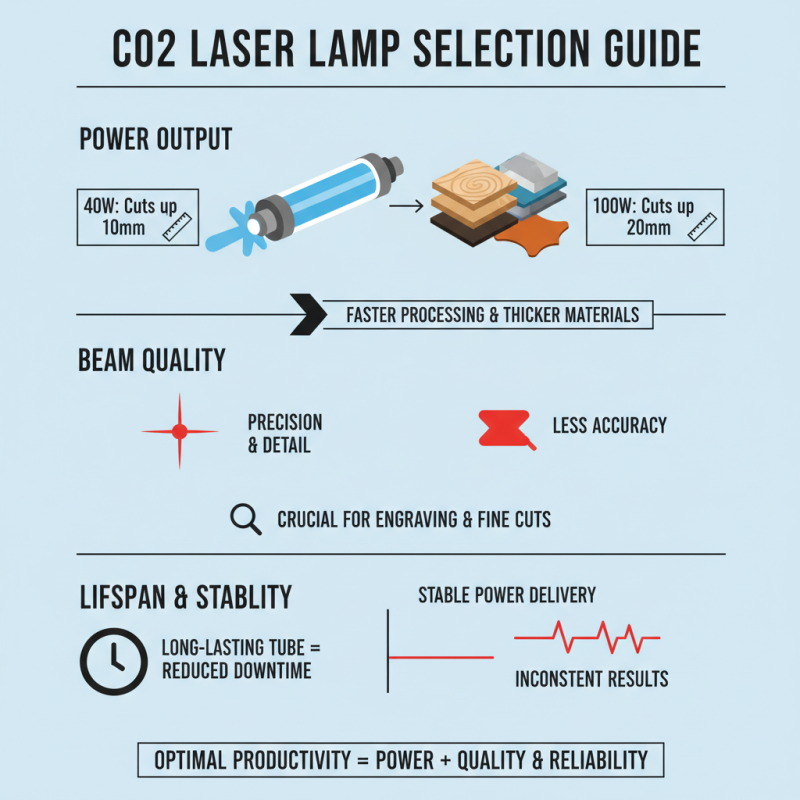
Choosing the right CO2 laser lamp requires careful consideration of several important factors. One key aspect is the power output of the lamp. Higher wattage generally translates to faster processing times and the ability to cut thicker materials. For instance, a 40W CO2 laser can effectively cut through materials up to 10mm, while a 100W laser may handle 20mm efficiently. This is crucial for businesses aiming for optimal productivity.
Another significant factor is the type of optics used. The quality of mirrors and lenses impacts the precision and clarity of the laser beam. Low-quality optics can lead to decreased engraving detail and inefficient cutting. Industry data shows that users who invest in higher-grade optics report a 30% improvement in output quality. Additionally, the cooling system of the laser lamp plays a vital role in its longevity and performance. An efficient cooling mechanism can extend the lifespan of the lamp and prevent overheating, creating a reliable long-term investment.
Consider the size and footprint of the CO2 laser lamp as well. It should fit comfortably within your workspace without hindering workflow. A compact design may come with limitations in material size, while larger systems often require more power and ventilation. Be mindful that the initial cost may not reflect the total long-term expense, including maintenance and operational costs. Reflecting on these factors will enhance your decision-making process.
Types of CO2 Laser Lamps and Their Applications
CO2 laser lamps are essential tools in various industries. Understanding their types and applications is crucial for choosing the right one. The most common types of CO2 laser lamps include glass tubes and sealed CO2 lasers. Glass tube lasers are widely used in engraving and cutting materials like wood, acrylic, and leather. They typically operate at a wavelength of 10.6 micrometers, providing excellent performance.
Research indicates that the market for CO2 lasers is expected to grow significantly, with a projected CAGR of around 6.5% from 2021 to 2028. This growth is largely driven by their applications in medical procedures, industrial marking, and signage. However, a common challenge is that many users underestimate the importance of proper maintenance. Over time, particle buildup can impact performance. Thus, implementing regular cleaning protocols is vital for longevity.
Additionally, sealed CO2 lasers are favored in medical fields for precision cutting. Their ability to deliver focused energy minimizes damage to surrounding tissues. But these lasers come at a higher cost, which can be a barrier for new practitioners. Users must weigh the benefits against potential expenses carefully. Balancing cost with performance is often difficult but necessary for effective operations.
Evaluating Power Output and Performance Metrics
When choosing a CO2 laser lamp, power output is critical. It directly impacts performance metrics and project outcomes. A higher wattage usually means faster cutting and engraving speeds. However, more power isn't always better. Each project has specific power needs based on material types and thickness.
Understanding the specifications is essential. Look for details like pulse frequency and beam quality. These factors contribute to the precision of your work. For example, materials like acrylic require different settings than wood or fabric. If you choose a lamp that doesn’t match your material, you might encounter issues like burning or insufficient cuts.
Performance metrics also help in evaluating options. Review benchmarks such as speed, durability, and energy efficiency. Consider tests and user reviews to gauge reliability. Not every laser lamp will meet your expectations or perform well under all conditions. Reflecting on your project needs is vital for making the right choice.
Understanding Compatibility with Your Laser System
When selecting a CO2 laser lamp, compatibility with your existing laser system is paramount. Each laser system has specific requirements for voltage, wattage, and connector types. A mismatch can lead to inefficiencies or even equipment damage. According to industry reports, nearly 30% of laser-related issues arise from compatibility errors. It's crucial to gather precise specifications from your laser system’s manual or manufacturer.
Tip: Always check the electrical ratings before purchasing. This simple step can save you time and costs associated with product returns and repairs. A poorly matched lamp could produce inconsistent results, affecting the quality of your work.
In addition to electrical compatibility, consider the physical dimensions of the laser lamp. Many users overlook the importance of size and fitting. A lamp that's too large or incompatible with mounting systems will be ineffective. Scattered reports indicate that about 25% of users experience disappointment due to size issues. Ensure that you measure your system carefully to avoid these pitfalls.
Tip: Look for user reviews online. These can provide insights into real-world performance and compatibility experiences. Your experience is important for future choices and can help others as well.
CO2 Laser Lamp Compatibility with Different Laser Systems
Tips for Budgeting and Cost-Effectiveness in Laser Lamp Selection
When selecting a CO2 laser lamp, budgeting is crucial. A study by industry analysts indicates that proper budgeting can save up to 30% on initial costs. The average price range for CO2 lasers can vary significantly. Prices generally span from $500 to over $5,000 depending on specifications and features. Knowing your budget prior to shopping can streamline the decision-making process.
Cost-effectiveness extends beyond initial purchase costs. The operational expenses, including maintenance and energy efficiency, impact long-term financial health. For example, a report by the Laser Institute of America suggests that efficient lasers can reduce energy costs by 20% over five years. Consider these factors when choosing the right lamp. Prioritizing your needs over features can also prevent costly mistakes. Focusing on essential functions can help avoid overspending.
Investing in training for effective use adds another layer to budgeting. Research shows that well-trained operators can maximize laser efficiency, reducing product waste. This, in turn, can lead to a more sustainable production cycle. Balancing upfront costs with potential savings creates a more informed purchasing strategy, essential for your operations.