Top 10 Laser Cavity Mirrors for Optimal Performance?
Laser Cavity Mirrors play a crucial role in the performance of laser systems. These mirrors are essential components that contribute to the overall efficiency and stability of lasers. High-quality mirrors enhance the laser's output power and beam quality.
Choosing the right Laser Cavity Mirrors can be challenging. Numerous options exist in the market, each offering a variety of specifications. The difference in coatings, materials, and designs can impact the laser's effectiveness. It's vital to consider these factors carefully. This guide reviews the top 10 mirrors available today.
Many professionals encounter difficulties when selecting laser mirrors. Errors in choice can lead to reduced performance or increased costs. Evaluating key parameters is essential for making informed decisions. By understanding the implications of each mirror type, users can achieve optimal results with their laser systems. Proper selection is not just about performance; it also ensures reliability in applications.
Definition and Importance of Laser Cavity Mirrors in Optics
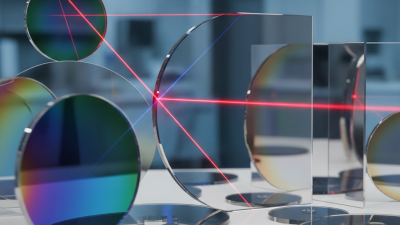
Laser cavity mirrors are vital components in the field of optics. They control the light within laser systems and ensure optimal performance. These mirrors serve several functions. They reflect and amplify light, allowing it to build up within the laser cavity. The quality and design of these mirrors can significantly affect the overall efficiency of the laser.
Choosing the right laser cavity mirror involves several considerations. The surface quality, coating type, and material all play critical roles. A mirror must withstand high intensities without degrading. Flaws in the mirror can lead to issues such as scattering and loss of energy. This highlights the importance of precision in mirror production. Even a minor defect can result in significant performance drops.
While many mirrors are available, not all are suitable for every application. It is essential to match the mirror specifications with the intended laser performance. Each type of mirror has unique properties, like wavelength compatibility. Understanding these details is crucial but can be complex. Users should continually evaluate their choices and adapt to new technologies where necessary.
Key Features to Consider When Selecting Laser Cavity Mirrors
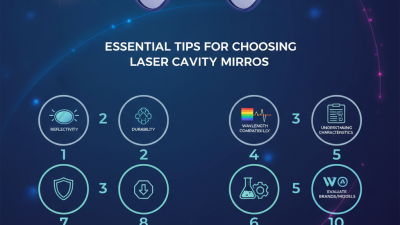
When selecting laser cavity mirrors, several key features should be assessed to ensure optimal performance. The reflectivity of the mirror is crucial. High-quality mirrors typically achieve reflectivity over 99.9%. This characteristic directly impacts the efficiency and output of the laser. Another essential aspect is the coating type. Different coatings can enhance performance for specific wavebands, usually tailored to the desired laser type. Reports suggest that optimizing the coating design can improve power handling by up to 20%.
The substrate material also matters significantly. Materials like fused silica provide excellent thermal stability, which is critical under high-power operations. Additionally, consider the surface quality. Imperfections such as scratches can degrade performance. An industry standard is to maintain a surface quality of 10-5 or better, as this reduces scattering losses and increases output intensity.
Remember, not all mirrors perform flawlessly. Regular inspections and maintenance are necessary to address wear and tear. Look out for signs of degradation in performance, such as beam distortion. Making adjustments based on performance evaluations is essential. This habit helps fine-tune the functionality of your setup.
When evaluating suppliers, check their credibility and track record. Reports indicate that procurement from established manufacturers results in fewer issues. Prioritize vendors who share performance data and technical specifications publicly, demonstrating transparency. Effective decision-making hinges on reliable information.
Top Materials Used for High-Performance Laser Cavity Mirrors
When choosing materials for high-performance laser cavity mirrors, certain qualities are critical. The refractive index, thermal stability, and reflectivity must align with the laser's specifications. Common materials include glass, quartz, and various coatings. For instance, fused silica is often praised for its low thermal expansion and high damage threshold, making it ideal for demanding applications. Research shows that mirrors using fused silica can achieve reflectivity exceeding 99.9%.
Dielectric coatings are another essential consideration. These layers enhance reflectivity and help tailor the mirror's performance. According to industry data, dielectric mirrors can maintain high reflectivity across a wide wavelength range. This versatility allows for better beam shaping and manipulation in diverse laser systems. However, manufacturing challenges exist. Achieving uniform coating thickness without defects can be difficult, affecting overall efficiency.
Material selection also involves trade-offs. While some materials like high-index glass offer excellent optical properties, they may be less durable under high-power conditions. This inconsistency in performance highlights the importance of careful evaluation. Researchers are continuously exploring new materials and coatings. The goal is to improve durability while maximizing performance. Understanding these nuances leads to optimal laser cavity designs.
Top 10 Laser Cavity Mirrors for Optimal Performance
| Mirror Type |
Coating Material |
Reflectivity (%) |
Dimensions (mm) |
Optimal Wavelength (nm) |
| Dielectric |
SiO₂/Si₃N₄ |
99.5 |
25 x 25 |
532 |
| Metal Coated |
Aluminum |
95 |
30 x 30 |
1064 |
| Thin Film |
TiO₂/SiO₂ |
99.8 |
20 x 20 |
1550 |
| High Reflectivity |
DBR (Distributed Bragg Reflector) |
99.9 |
40 x 40 |
1064 |
| Ultra-Thin Mirror |
ZnS |
98 |
15 x 15 |
400 |
| Polarizing |
Polymer Film |
97 |
50 x 50 |
532 |
| Spherical Mirror |
Glass |
90 |
20 Radius |
1064 |
| Aspheric Mirror |
Fused Silica |
99.6 |
25 x 25 |
1550 |
| Beam Splitter |
Dielectric |
50 |
30 x 30 |
800 |
| High Power Mirror |
Alumina Coating |
99.7 |
40 x 40 |
1064 |
Comparison of Popular Laser Cavity Mirrors in the Market
When it comes to laser cavity mirrors, a wide range of options exist. These mirrors play a crucial role in the performance of lasers. Choosing the right one can be challenging, even for experienced professionals. The market offers mirrors with various coatings, shapes, and sizes. Each type has its advantages and drawbacks. It's vital to understand how these technical specifications can affect your laser system.
Some mirrors are designed for specific wavelength ranges, while others provide broader coverage. For example, high-reflectivity mirrors may suit applications requiring intense light amplification. However, their narrow bandwidth could limit versatility. Conversely, mirrors with lower reflectivity might be more adaptable, but they may fall short in intensity. Evaluating the needs of your application is essential. Attention to these details can lead to optimal performance.
Quality and reliability are paramount. Inconsistent manufacturing processes can result in subpar mirrors. This inconsistency can affect beam quality. Furthermore, environmental conditions may introduce challenges. For instance, humidity or temperature variations can affect mirror performance over time. Regular maintenance and checks can prevent issues but require time and effort. The choice of laser cavity mirrors is critical. It requires a careful assessment of features, applications, and potential pitfalls.
Applications and Impact of Laser Cavity Mirrors in Various Industries
Laser cavity mirrors play a pivotal role in various industries, enhancing the efficiency of laser systems. In the medical sector, for instance, these mirrors are critical for applications such as laser surgery and dermatology. A report by the International Journal of Medical Technology indicates that precision in laser procedures has resulted in a 30% increase in successful outcomes compared to traditional methods. The high reflectivity of these mirrors ensures that laser light is optimally directed, minimizing damage to surrounding tissues.
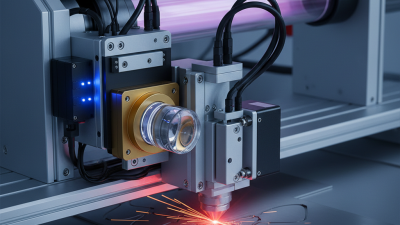
In the manufacturing realm, laser cavity mirrors facilitate advancements in material processing. According to a survey by Laser Focus World, industries utilizing lasers for cutting and engraving have seen productivity improvements exceeding 25%. These mirrors ensure that laser beams maintain their intensity and focus, which is essential for intricate designs. However, the reliance on specific mirror coatings can pose challenges. Variations in the optical coatings can alter performance. Companies must continuously assess and refine these technologies to maximize their effectiveness.
Furthermore, the optical properties of laser cavity mirrors significantly influence the performance of laser systems in research. High-quality mirrors enable precise experimentation and data collection. Reports reveal that up to 20% of experiments yield better results when appropriate mirrors are used. Despite advancements, selecting the right mirror remains a complex decision. Factors such as wavelength, power density, and environmental conditions must be carefully considered to achieve optimal results.
Top 10 Laser Cavity Mirrors for Optimal Performance
This chart illustrates the performance characteristics of the top 10 laser cavity mirrors based on reflectivity, wavelength range, and thermal stability. The data is critical in understanding the impact of each mirror on laser applications across various industries.