What is Laser Cavity Mirrors and How Do They Work?
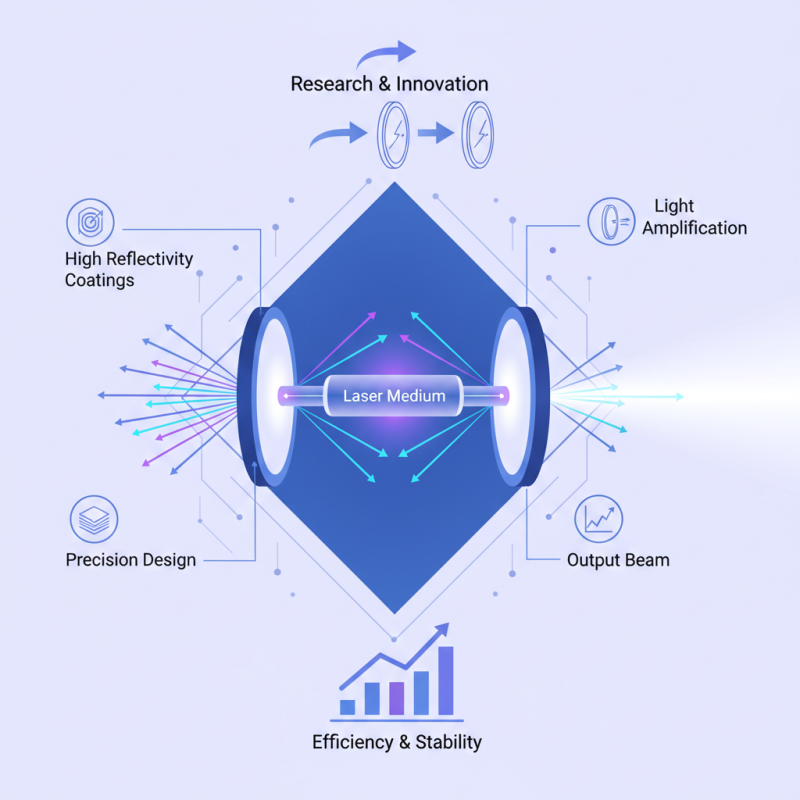
Laser Cavity Mirrors play a critical role in the function of lasers. They are essential components that direct and amplify light within the laser medium. Dr. Emily Hart, a renowned expert in optics, states, “The quality of laser cavity mirrors directly affects the efficiency of the laser system.” These mirrors reflect light back and forth within the cavity, enhancing the light intensity. Their design and coatings are vital for optimal performance. Every detail matters; even a slight imperfection can impact output. Engaging with the technology behind Laser Cavity Mirrors offers a glimpse into the precise and intricate world of laser engineering. However, the field faces ongoing challenges. Ensuring uniform coatings can be complex. There's always room for improvement. Research continues to refine these mirrors, aiming for higher efficiency and better stability. The evolution of Laser Cavity Mirrors is a testament to innovation.
What Are Laser Cavity Mirrors?
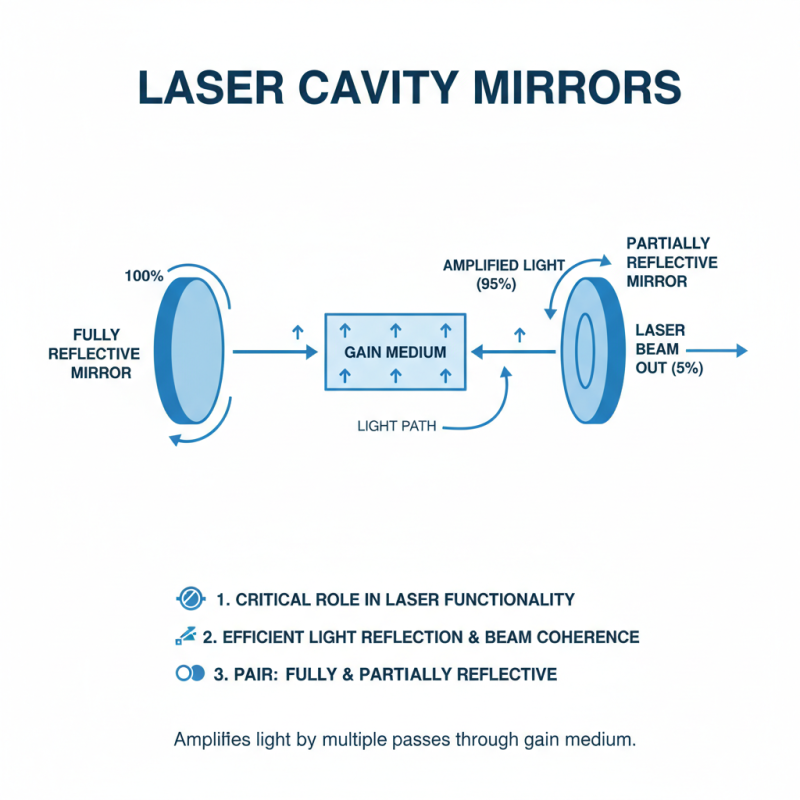
Laser cavity mirrors are critical components in the design of laser systems. They play a significant role in the amplification of light. These mirrors are specially coated to reflect specific wavelengths efficiently. Their effectiveness greatly influences the laser's output power and stability. In a typical laser cavity, one mirror is fully reflective while the other is partially reflective. This design allows for the amplification of light within the cavity. Studies indicate that the reflectivity of these mirrors can exceed 99.9%. Therefore, they significantly enhance the energy density of the light. This high reflectivity leads to powerful laser output, essential in various applications. The alignment and precision of laser cavity mirrors are vital. Even slight misalignment can cause issues. It might lead to lower efficiency or inconsistent laser propagation. Industry reports highlight that improper mirror installation can reduce a laser's performance by up to 30%. Such details are crucial for manufacturers and researchers aiming for high-quality output. Understanding these factors helps in refining laser technologies further.
Laser Cavity Mirrors: Performance Metrics
This chart illustrates the reflectivity, transmission, and absorption percentages of laser cavity mirrors across different wavelengths (in nanometers). The data showcases the importance of these mirrors in optimizing laser performance.
Types of Laser Cavity Mirrors and Their Functions
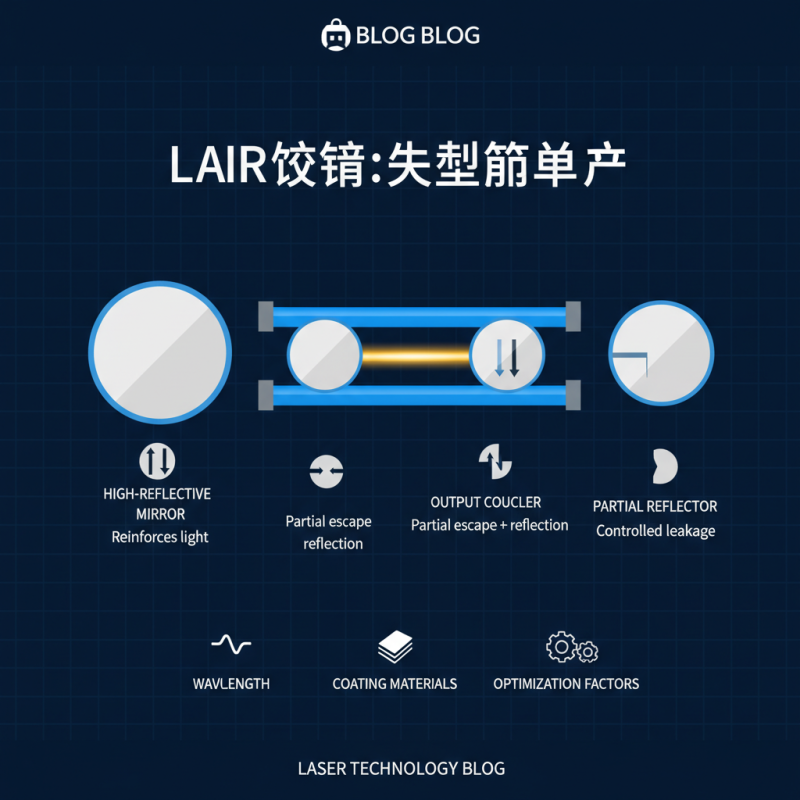
Laser cavity mirrors are essential components in laser technology. They play a crucial role in determining the performance and characteristics of a laser. There are various types of mirrors used in laser cavities, and each has a unique function. One common type is the high-reflective mirror, often placed at one end of the laser cavity. These mirrors reflect a substantial amount of light, helping to reinforce the light waves and increase the intensity of the laser beam. On the other end, the output coupler lets some light escape while reflecting the rest back into the cavity. This balance is vital for producing a coherent laser beam. Another type is the partial reflector. These mirrors have a specific reflectivity that allows for controlled light leakage. This feature can help in adjusting the output power of the laser. Understanding these types can be challenging. Sometimes, choosing the right mirror requires careful consideration of various factors, such as wavelength and coating materials. Each mirror type contributes to the laser's function in significant ways. However, optimizing these components might not always yield perfect results. It often involves trial and error to achieve the desired laser characteristics.
How Laser Cavity Mirrors Reflect Light
Laser cavity mirrors play a critical role in the functionality of lasers. These mirrors are designed to reflect light efficiently and maintain the coherence of the beam. A standard laser cavity contains a pair of mirrors, typically one fully reflective and the other partially reflective. The configuration helps ensure that most of the light is circulated multiple times through the gain medium, amplifying it.
Reflective surfaces in laser cavities must adhere to strict specifications. According to industry reports, a high reflectivity of up to 99.999% is essential for optimal efficiency. This level of reflectivity minimizes losses and enhances the overall performance of the laser. In practical applications, even minor imperfections on the mirror surface can disrupt performance.
Effective functioning of laser cavity mirrors also depends on the material used. Commonly, optical-grade substrates like fused silica or certain coatings are applied. These factors impact not only reflectivity but also thermal stability. An increase in temperature can lead to expansion, which might misalign the mirrors. This misalignment can result in reduced laser output. Continuous monitoring and adjustments are often needed to ensure peak performance. It is critical to explore these practical details for enhancing laser technology further.
The Role of Coating in Laser Cavity Mirrors
In laser technology, cavity mirrors play a crucial role. Their effectiveness heavily depends on the coatings applied to their surfaces. These coatings determine the mirror's reflectivity characteristics. A high reflectivity is vital for the energy build-up in the laser cavity. Typically, reflectivity is optimized between 90% to 99.9%. However, achieving this can be complex. The coating material affects how well a mirror performs. Good materials can withstand high power densities. Unfortunately, some coatings may degrade under certain conditions. It’s important to choose the right coating. For instance, dielectric coatings offer high reflectivity but can be sensitive to environmental changes.
Tips: Always keep your laser systems clean. Dust and contaminants can degrade mirror performance. Additionally, consider regular maintenance checks as coatings may wear over time. Be aware of thermal effects; excessive heat can alter reflectivity. In industrial applications, laser systems often operate in rigorous environments. The chosen coating must withstand humidity, dust, and temperature variations. Choosing coatings with good thermal management qualities can mitigate these risks.
Yet, decisions can be daunting. Balancing cost and performance is often a concern. Reflect on the long-term implications of your choices.
Applications of Laser Cavity Mirrors in Technology
Laser cavity mirrors play a crucial role in various technological applications. These mirrors are essential components in laser systems. They help create the necessary feedback for lasing action. According to a recent report by the Laser Institute of America, the global laser technology market is expected to exceed $15 billion by 2025, highlighting the importance of these components.
In telecommunications, laser cavity mirrors are key in optical communication systems. They help amplify signals and improve data transmission rates. Enhanced signal quality leads to faster internet speeds for users. Furthermore, in the medical field, these mirrors are used in precision laser surgeries. They ensure accurate beam focusing, significantly improving surgical outcomes. A study by the American Society for Laser Medicine and Surgery notes that laser surgeries are less invasive and result in shorter recovery times.
Tips: Regular maintenance of laser cavity mirrors is essential. Dust and fingerprints can affect performance. Always handle mirrors with care. Consider using specialized cleaning solutions.
Innovative sectors like manufacturing also utilize laser cavity mirrors. They aid in cutting and engraving materials with extreme precision. Yet, challenges remain. For instance, misalignment can lead to energy loss. Consequently, engineers must constantly evaluate system performance to ensure optimal operation.
What is Laser Cavity Mirrors and How Do They Work? - Applications of Laser Cavity Mirrors in Technology
| Dimension |
Description |
Applications |
| Reflectivity |
The measure of a mirror's ability to reflect light, typically expressed as a percentage. |
Used in laser systems to achieve high efficiency in light amplification. |
| Coating Type |
Specialized coatings are applied to enhance reflectivity and durability. |
Critical in high-powered laser applications and medical devices. |
| Wavelength Range |
The specific wavelengths of light that the mirror can effectively reflect. |
Important for tuning lasers for specific applications such as telecommunications. |
| Physical Size |
Dimensions of the mirror is often dependent on the application and required beam quality. |
Size variations for industrial, medical, and research lasers. |
| Beam Divergence |
Describes how concentrated or spread out the laser beam is after leaving the cavity. |
Influences usage in cutting, welding, and surgical applications. |