China Best Laser Tube Supplier How to Choose?
Choosing the China best Laser Tube supplier requires more than comparing prices on a product page. CO2 laser tubes differ in power stability, beam quality, cooling design, electrode life, and manufacturing consistency. A tube may look identical in photographs, yet perform differently after several hundred operating hours. In practical workshop testing, unstable output often appears as uneven engraving, wider kerf lines, or darkened acrylic edges.
Market evidence supports careful supplier evaluation. Grand View Research’s Laser Technology Market report identifies material processing as a major application area, supported by automation and wider industrial adoption. Fortune Business Insights also reports strong laser technology growth, driven by electronics, manufacturing, and precision processing. These trends increase demand for dependable components, but they also create more low-cost, inconsistent products. The report figures describe the broader laser industry, not every Laser Tube factory. That distinction matters.
A reliable supplier should provide measured power tolerance, recommended operating current, cooling-water requirements, test records, and clear warranty terms. Ask for batch traceability. Request samples before placing a large order. Check whether the supplier tests tubes under working conditions, rather than only displaying a factory rating. Certifications can support credibility, but they do not replace performance data. After-sales response is equally important when a tube fails during production. No checklist is perfect. I would still compare beam stability after warm-up, packaging quality, replacement speed, and communication clarity. A strong China supplier should explain limitations honestly, not promise unlimited tube life. The best decision balances verified performance, technical support, delivery reliability, and total operating cost.
What Defines a Reliable Laser Tube Supplier in China?
A reliable laser tube supplier in China proves performance before discussing price. In my experience, a serious supplier provides tube test records, production dates, electrical readings, and clear replacement terms. Ask for output power, beam stability, ignition voltage, cooling requirements, and expected service life. A clean serial number and traceable inspection record matter more than polished sales language.
Market data supports careful purchasing. Grand View Research estimated the global laser technology market at about USD 18 billion in 2023, with continued industrial growth expected. This expansion increases supplier choices, but quality can vary sharply. The 2024 Fortune Business Insights report also identifies manufacturing as a major laser application sector. That means unstable output can affect cutting speed, edge quality, and material waste. Small differences become expensive.
Request a sample test under your actual working conditions. Check the tube after repeated operation, not only during a short demonstration. Reliable suppliers should explain cooling-water temperature, storage limits, installation steps, and warranty exclusions. They should also provide replacement support without vague promises. ISO 9001 certification can indicate controlled processes, but it does not guarantee tube performance by itself. I once treated a low quote as proof of efficiency. It was not. A better evaluation compares measured output, defect rates, response time, and long-term service records. Cheap is sometimes useful. It is never enough.
Which Laser Tube Specifications Match Your Equipment?
Choosing a laser tube starts with your equipment, not the supplier’s catalog. Check the machine’s rated power, tube length, outer diameter, working current, and high-voltage requirements. These figures must match the controller and power supply.
Measure the available tube space carefully. A few millimeters can affect mounting and cooling. Confirm the water inlet position, outlet position, and connector style. Also check whether the machine uses a sealed glass tube or another structure. Do not rely on appearance alone.
Cooling capacity matters. A tube may require stable circulating water, with temperature commonly controlled near the manufacturer’s recommended range. Excess heat can shorten tube life and reduce cutting consistency. Air bubbles are easy to overlook. They can create uneven cooling.
Review the rated power and actual operating power. Higher power is not always better. An oversized tube may stress the power supply or exceed the machine’s optical design. A weaker tube may produce incomplete cuts and slower production.
In replacement work, technicians should compare the datasheet with the old tube before ordering. Record the original voltage, current, dimensions, and mounting distance. Take clear photos of both ends. Small errors happen, even with experienced buyers.
Ask the supplier for test data, inspection records, warranty terms, and installation guidance. Reliable technical support should explain compatibility, not simply recommend the most powerful option. If one specification remains uncertain, pause the purchase and verify it with the equipment manufacturer’s manual.
China Best Laser Tube Supplier: How to Choose?
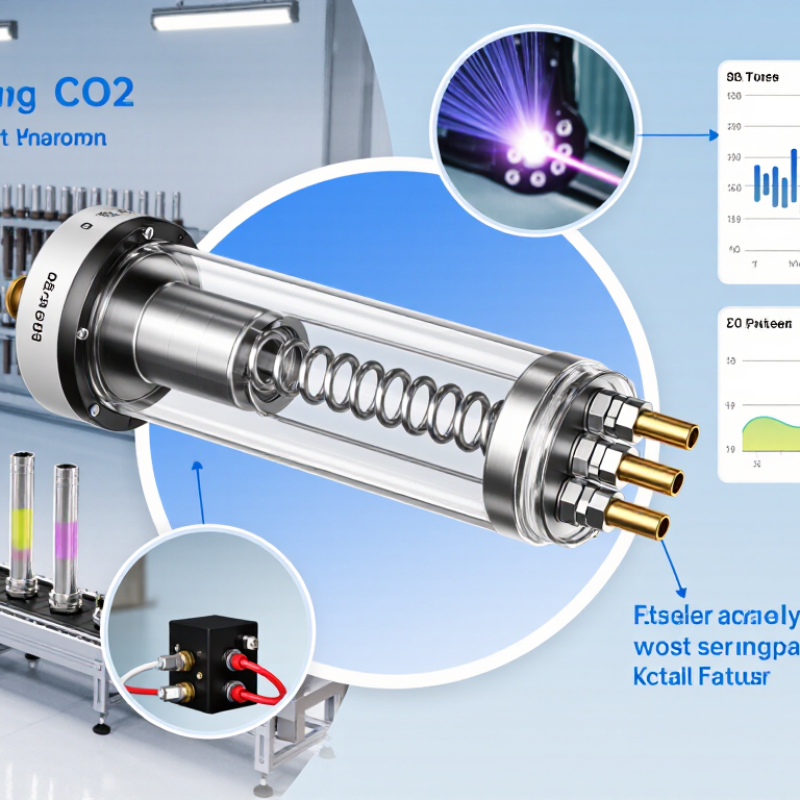
Which laser tube specifications match your equipment? The chart below shows common CO₂ glass laser tube formats and their typical rated output power. Always confirm tube length, diameter, operating current, cooling requirements, and laser power supply compatibility before replacement.
Selection guide: A replacement tube should match your machine’s available mounting length and diameter first. The power rating should also stay within the range supported by the laser power supply, mirrors, lens, cooling system, and control settings.
How to Evaluate Quality, Certifications, and Production Standards
China Best Laser Tube Supplier How to Choose?
When evaluating a laser tube supplier in China, inspect performance data, not attractive claims. Ask for measured output power, beam stability, ignition time, and expected service life. A reliable supplier should provide batch test records with serial numbers. Check the tube’s glass quality, electrode alignment, cooling channels, and optical window clarity. Small defects can cause unstable cutting and early failure.
Certifications need careful verification. ISO 9001 indicates a managed quality system, but it does not prove every tube performs well. Confirm the certificate’s issuing body, validity period, and production scope. For overseas markets, request applicable safety and environmental documents, such as CE or RoHS evidence. Ask whether testing covers the exact model you will purchase. A copied certificate is useless. Independent laboratory reports offer stronger evidence than a decorative document.
Production standards reveal daily discipline. Look for incoming material inspection, controlled gas filling, leak testing, electrical testing, and aging tests before shipment. Serial-number traceability should connect each tube to operators, test results, and production dates. Request a factory video or arrange an audit when order volume justifies it. Compare samples from different batches, because one excellent sample proves little. No supplier is flawless. I would question unusually long lifetime promises, especially without operating conditions. Clear warranty limits, replacement procedures, and response times matter. A lower price may hide weaker testing, inconsistent electrodes, or poor after-sales support. Be willing to reject a supplier that avoids technical questions.
How to Compare Prices, Minimum Orders, and Delivery Terms
Choosing China’s best laser tube supplier requires more than the lowest quotation. For CO2 laser tubes, compare usable power, beam stability, warranty coverage, and measured service life. A 100 W tube priced lower may deliver weaker cutting and earlier replacement. Grand View Research valued the global laser technology market at about USD 18.4 billion in 2023. This growth makes quality control important. Ask for test records, electrode dimensions, gas-fill dates, and power-test videos. Not just a certificate.
Compare prices as landed costs, not unit costs. Add tooling, export packing, freight, insurance, taxes, spare parts, and payment fees. Request quotations for 1, 10, and 50 pieces. Minimum orders often change the real price. A low MOQ supports testing, but freight may cost more per tube. For delivery, separate production time from transit time. Write Incoterms clearly. The World Bank’s 2023 Logistics Performance Index shows major differences in customs speed and shipment reliability. A seven-to-fourteen-day buffer may help urgent orders. It is not universal. Check the route data.
Tips:
Order one sample before a pallet. Confirm dead-on-arrival replacement terms in writing. Check whether the warranty covers output loss, not only total failure. Record packaging damage at arrival. Buyers sometimes compare quotations carefully, then overlook connector compatibility. That mistake is expensive.