What is a Fresnel Lens Focus and Why Does it Matter?
Fresnel Lens Focus plays a crucial role in optics and lighting applications. This innovative lens allows for substantial light manipulation in a compact design. According to a report by the Optical Society, Fresnel lenses can achieve up to 90% light transmittance, significantly increasing efficiency in devices such as projectors and solar panels.
In industries like innovative lighting and solar energy, understanding Fresnel Lens Focus is essential. The growing adoption of renewable energy technologies has spurred interest in these lenses. A study from the International Renewable Energy Agency notes that systems utilizing these lenses can enhance solar collection by up to 25%. Such improvements drive advancements in energy efficiency and lower costs for consumers.
However, the application of Fresnel Lens Focus is not without challenges. Precision in manufacturing is vital to avoid optical distortions. Some reports indicate a 15% defect rate in mass-produced lenses, which can impact performance. Thus, ongoing research and development are necessary to refine these lenses' quality and reliability.

Definition of a Fresnel Lens and Its Fundamental Principles
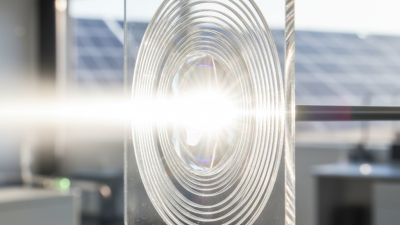
A Fresnel lens is a unique optical device. It consists of a series of concentric rings. These rings allow the lens to capture and focus light more effectively than a traditional lens. Its design reduces the amount of material needed, making it lightweight and cost-effective. The fundamental principle behind a Fresnel lens is the same as that of conventional lenses, which is to bend light rays to a focal point. This design greatly enhances efficiency in various applications, from lighthouse beacons to camera systems.
Recent reports indicate that the usage of Fresnel lenses in solar energy applications is growing. The International Energy Agency notes that solar thermal technologies can benefit significantly from Fresnel lenses, improving energy collection rates by up to 30%. Fresnel lenses can achieve a focus spot size of merely a few millimeters, making them ideal for precision applications. However, their design requires careful calculation to ensure optimal performance.
**Tips**: When working with Fresnel lenses, consider their thickness. A thinner lens can improve light transmission but may require additional support for stability. Always check the focal length based on your application. If the lens is not aligned properly, you may encounter significant losses in light efficiency.
Fresnel Lens Focus: Understanding Light Concentration
The chart above illustrates key characteristics of a Fresnel lens, including its focal length, light intensity, and typical areas of application. Understanding these elements is crucial for the effective utilization of Fresnel lenses in various optical devices.
Historical Development and Applications of Fresnel Lenses
Fresnel lenses have a rich historical background. They were invented by Augustin-Jean Fresnel in the early 19th century. Initially designed for lighthouses, these lenses allowed for long-distance light projection. Their unique design, with concentric grooves, reduced the bulk of traditional lenses while maintaining optical performance. This made them ideal for maritime navigation.
Over the years, Fresnel lenses found applications in various fields. They are used in projectors, car headlights, and solar concentrators. In the realm of photography, they help focus light efficiently, enhancing image quality. The ability to create thin, lightweight lenses has changed how we use optics.
Tip: When researching Fresnel lenses, pay attention to their specific applications. Different designs serve different purposes. Consider how these lenses can improve your projects or experiments.
Despite their advantages, Fresnel lenses are not without flaws. They can exhibit chromatic aberration. This may limit their effectiveness in some scenarios. Understanding these limitations can guide better choices in lens selection.
Tip: Experiment with different Fresnel lens types. Sometimes, trial and error leads to the best results. Each lens has unique properties that can enhance your work.
Understanding the Focus of a Fresnel Lens: Mechanics and Behavior
A Fresnel lens is a unique optical device that focuses light effectively. It is characterized by its concentric rings, which create a flat yet powerful lens. Understanding how these lenses work involves examining the light manipulation process. Each ring redirects light toward a common focus point. This design is crucial for applications in lighthouses and projection systems.
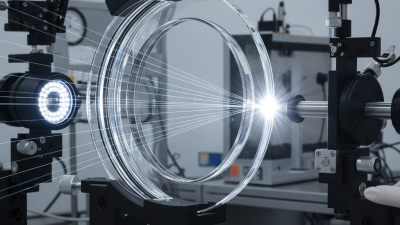
When light hits a Fresnel lens, the behavior changes dramatically. The rings alter the angles of incoming rays, ensuring they converge efficiently. This results in a vibrant and intense focal point. However, not all designs achieve the same quality of focus. Variations in ring spacing influence the clarity and brightness. Some configurations may create aberrations. Exploring these imperfections can lead to better lens designs.
The significance of a well-focused Fresnel lens extends to various fields. Photovoltaic systems benefit from enhanced light concentration, improving energy efficiency. Similarly, in theatrical lighting, a brilliant focus enhances performance artistry. Recognizing the mechanics and behavior of Fresnel lenses allows for innovative applications. Yet, balancing efficiency with clarity in design remains a challenge. Each improvement paves the way for future advancements.
Importance of Fresnel Lens Focus in Optical Devices and Innovations
Fresnel lenses play a crucial role in various optical devices. Their unique design allows them to focus light efficiently without the bulk of traditional lenses. The key to their performance lies in the precision of the focus. A well-aligned Fresnel lens can drastically enhance image quality in projectors, lighthouses, and solar applications. However, achieving that perfect focus often requires meticulous adjustments.
In recent innovations, the importance of Fresnel lens focus has become even more pronounced. With the rise of compact optical systems, smaller and lighter lenses are necessary. Misalignment can lead to wasted energy and poor performance. Engineers must consider factors like light dispersion and surface imperfections. Small deviations can cause significant issues. Attention to detail is vital to ensure optimal functionality in advanced technologies.
The integration of Fresnel lenses into augmented reality and smart devices showcases their growing significance. As applications evolve, the demands for precise focus continue to increase. Developers must navigate the challenges of creating versatile, high-performing optics. It’s an ongoing journey, pushing the boundaries of design and engineering. Addressing these complexities can lead to refined optical solutions that shape the future.
Comparative Advantages of Fresnel Lenses Over Traditional Lenses
Fresnel lenses are unique optical devices designed to focus light. They differ significantly from traditional lenses in shape and functionality. A Fresnel lens consists of a series of concentric grooves, allowing it to be thinner and lighter than conventional glass lenses. This design reduces weight by up to 90% without sacrificing performance, which is crucial for applications in various fields.
In terms of efficiency, Fresnel lenses can concentrate sunlight 10 times more than standard lenses. According to a report by the U.S. Department of Energy, these lenses can enhance solar energy systems, improving their capability to harness solar power effectively. Additionally, Fresnel lenses have a broader field of view, making them ideal for augmented reality devices and large-scale imaging systems. However, they can introduce optical aberrations, which may impact image quality.
Despite benefits, some challenges remain. Fresnel lenses can be less durable compared to traditional lenses. Their surface is more prone to scratches and may require more frequent cleaning. Also, precise alignment is essential; misalignment can degrade their performance significantly. Industry experts acknowledge this trade-off, highlighting the need for continuous innovation in lens design to overcome such limitations.