2026 How to Choose the Right Co2 Laser Tube for Your Needs?
In 2026, selecting the right CO2 laser tube is crucial for efficiency and precision in various applications. According to industry reports, the global CO2 laser market is projected to reach $4.12 billion by 2026, reflecting a growing demand. This growth highlights the importance of making informed choices when it comes to laser tubes.
Many factors influence the selection process. The wattage, length, and type of the CO2 laser tube can significantly affect performance. For example, higher wattage tubes deliver faster cutting speeds but may require more power and maintenance. The wrong choice can lead to inefficiencies and increased costs over time.
Recent studies indicate that businesses often overlook compatibility with existing systems. Ignoring this can result in operational delays and subpar results. A thoughtful approach to choosing the right CO2 laser tube can help mitigate such risks and enhance productivity. Balancing cost and quality is a delicate task, but it is essential for long-term success in laser applications.
Understanding CO2 Laser Tubes: Basics and Applications
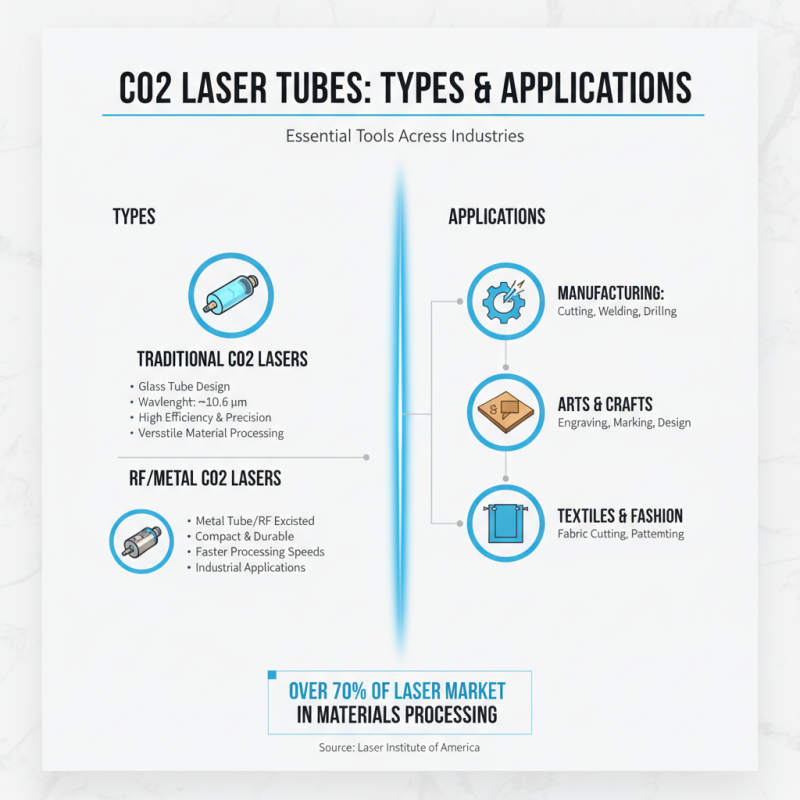
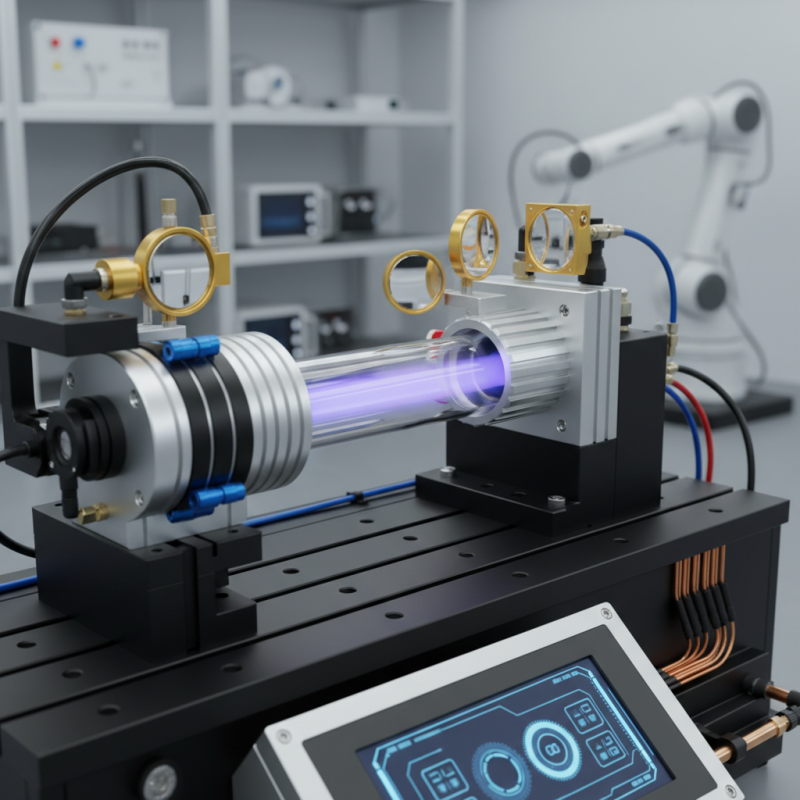
CO2 laser tubes are vital tools in various industries, from manufacturing to arts and crafts. Understanding the different types can significantly impact your projects. Traditional CO2 lasers are known for their efficiency and precision. They have wavelengths that make them suitable for cutting, engraving, and marking different materials. A report from the Laser Institute of America stated that CO2 lasers account for over 70% of the laser market in material processing.
When selecting a CO2 laser tube, consider the application. For example, a high-power tube is better suited for thicker materials. A standard metal cutting application may require a tube with a power range of 60-150 watts. Accurate power ratings can ensure optimal performance. However, it’s essential to note that power alone isn’t the only factor. The quality of the optics and the design of the laser system can also affect results.
Reflecting on the limitations, some users find operational costs higher than expected. Maintenance, replacement, and power consumption must be accounted for. Without proper research, choices can lead to inefficiencies. Many users have regretted purchasing a too-powerful tube for their needs. This highlights the importance of understanding specific requirements before making a decision.
Key Factors to Consider When Choosing a CO2 Laser Tube
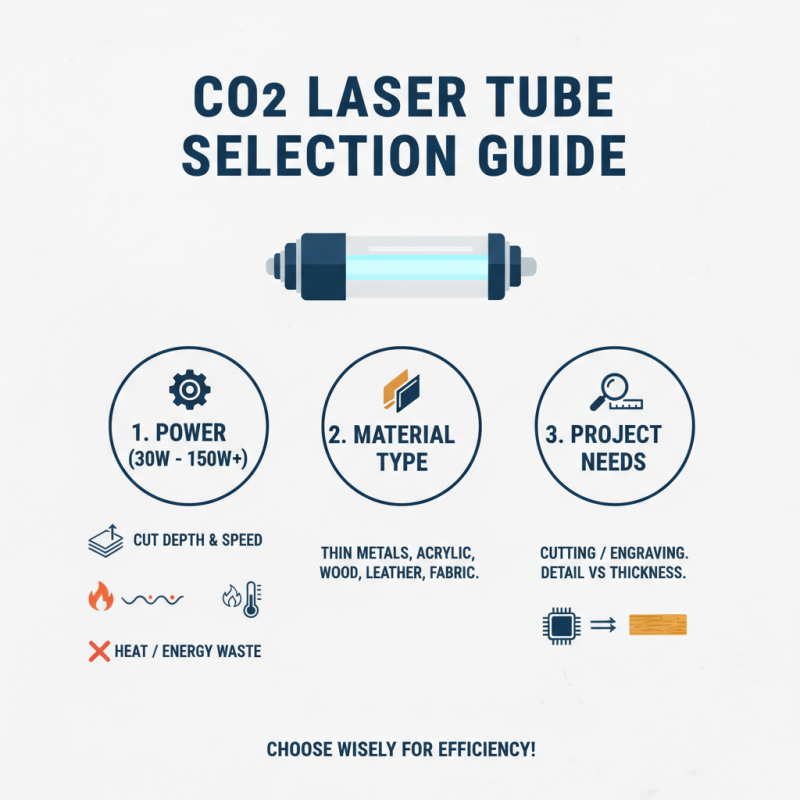
When choosing the right CO2 laser tube, several key factors come into play. The power of the laser tube is crucial. It determines how deep and fast you can cut or engrave materials. Typically, tubes range from 30W to over 150W. Higher wattage allows for thicker materials. However, consider your projects carefully. A too powerful tube can waste energy and lead to excessive heat.
Another important factor is the size of the tube. Ensure it fits your laser machine. Some models only accommodate specific lengths or diameters. Check the dimensions of the workspace and the connectors. Incorrect sizes can cause frustration and lead to poor performance.
Tips: Assess your material needs before buying. Different materials require different power settings. For artisanal pieces or delicate items, a lower wattage may suffice.
Additionally, think about the lifespan of the tube. Most CO2 tubes last between 2,000 to 10,000 hours of use. A shorter lifespan can mean more frequent replacements. Factor this into your budget. Maintenance is also essential. Gather information on how to care for your tube to maximize its efficiency and lifespan. Make a habit of checking for any wear and tear. Plan your use wisely to get the best results from your investments.
Comparing Different CO2 Laser Tube Types and Specifications
When choosing a CO2 laser tube, consider various specifications that meet your needs. The power output is crucial. Tubes commonly range from 30W to 150W. A higher wattage allows for cutting thicker materials but may also require more cooling. Dimensions of the tube should match your existing setup. Some tubes come in standard sizes, while others are more specialized. Ensure compatibility.
Next, focus on the tube's lifespan. Many CO2 tubes offer a lifespan between 1,000 to 10,000 hours. Different manufacturing processes affect longevity. Pay attention to the cooling systems as well. Water-cooled tubes perform well but require a reliable water source. Air-cooled options are convenient but may overheat faster. Reflect on your production needs.
Lastly, examine the material compatibility. CO2 lasers excel at cutting and engraving various materials like wood, acrylic, and leather. However, they struggle with reflective metals, which could lead to inefficiencies. Selecting the right tube type is an investment in your workflow. Evaluate all angles before committing. Each choice impacts performance in unique ways.
2026 How to Choose the Right CO2 Laser Tube for Your Needs? - Comparing Different CO2 Laser Tube Types and Specifications
| Laser Tube Type |
Wattage |
Length |
Diameter |
Lifespan |
Cooling Type |
| Standard CO2 Tube |
40W |
1.5 m |
50 mm |
2000 hours |
Air-cooled |
| High-Power CO2 Tube |
100W |
1.8 m |
80 mm |
3000 hours |
Water-cooled |
| Long-Lasting CO2 Tube |
60W |
1.2 m |
60 mm |
2500 hours |
Air-cooled |
| Compact CO2 Tube |
30W |
1.0 m |
40 mm |
1500 hours |
Air-cooled |
Assessing Compatibility with Your Laser System
Choosing the right CO2 laser tube involves understanding compatibility with your laser system. The type of laser system you own can significantly influence your selection. A study by the Laser Institute suggests that nearly 40% of users encounter issues related to tube compatibility. This statistic emphasizes the need for thorough research before making a purchase.
Consider the wattage of your laser system. CO2 laser tubes generally range from 25W to 150W. Mismatched power levels can lead to inefficient performance or even damage. An improperly matched tube might not energize correctly, resulting in inconsistent output. Pay attention to the electrical and cooling requirements as well. Some systems need specialized cooling, and failing to accommodate this can lead to overheating.
Think about your application as well. Will you be cutting, engraving, or marking materials? Each task has different demands. According to industry insights, approximately 55% of users switch tubes due to inadequate performance for their specific use. Reflect on your current system's limitations and how a new CO2 laser tube could resolve these concerns.
2026 CO2 Laser Tube Selection Analysis
This bar chart illustrates the compatibility ratings of various CO2 laser tube specifications with common laser systems. The data is gathered from industry standards to aid users in choosing the right laser tube for their needs.
Maintenance and Longevity: Tips for CO2 Laser Tubes
Proper maintenance is crucial for CO2 laser tubes. Reports indicate that regular check-ups can extend their lifespan significantly. For instance, routine cleaning can enhance the efficiency of the laser. Dust build-up can obstruct the beam path, causing the performance to drop. Scheduled inspections every three months are recommended.
Another vital aspect is the cooling system. CO2 lasers operate best at controlled temperatures. The optimal range lies between 18°C and 25°C. High temperatures can lead to premature failure. On the flip side, suboptimal cooling can also reduce performance. Understanding how to balance these factors is key.
Moreover, users often overlook the power settings. Operating at the wrong range can shorten the tube's life. Studies suggest that maintaining between 30% and 70% power will optimize longevity. Remember, a lower power setting may require more time for cutting. It's a trade-off some may not consider initially.