How to Choose the Best CO2 Laser Lamp for Your Projects?
Choosing the right CO2 Laser Lamp can significantly impact your projects. According to Dr. Emily Carter, a leading expert in laser technology, "The effectiveness of a CO2 Laser Lamp lies in understanding your specific needs." Her words highlight the importance of selection.
When evaluating CO2 Laser Lamps, consider power, wavelength, and intended use. Different materials require different specifications. A lamp with higher wattage works better for thicker materials. Some users overlook this essential factor, leading to unsatisfactory results and wasted materials.
Reflect on your goals before making a choice. Are you focusing on precision engraving or cutting? Each application demands different qualities. Investigate various brands and read reviews. Ask fellow makers about their experiences. Remember, even experts learn from trial and error. This mindful approach can help you find the ideal CO2 Laser Lamp for your creative journey.
Understanding the Basics of CO2 Laser Lamps for Your Projects
When selecting a CO2 laser lamp for your projects, understanding the basics is essential. CO2 laser lamps are widely used for cutting, engraving, and marking materials. They are suitable for a variety of substrates, including wood, acrylic, and fabric. The power range of CO2 laser lamps typically spans from 30W to 150W. Higher wattage allows faster processing but may lead to material burns if not managed properly.
One significant consideration is the wavelength. CO2 lasers operate at a wavelength of 10.6 micrometers, making them effective for non-metal materials. Reports show that over 60% of laser users prioritize wavelength when choosing a lamp. This is crucial to ensure optimal absorption by the material being processed.
Tip: Evaluate the materials you will use. This helps in selecting the right wattage.
Cooling systems are another aspect to think about. CO2 lasers generate heat, requiring efficient cooling. Many models use water cooling, but aftermarket solutions exist. These can be beneficial for extended usage but can lead to maintenance challenges.
Tip: Regularly check your cooling system’s efficiency to avoid overheating issues.
Not all CO2 laser lamps are created equal. Consider factors such as lifespan and energy efficiency. Some lamps may last only a few hundred hours. Others can operate for over a thousand. This variability can impact your project's cost-effectiveness.
Factors to Consider When Choosing a CO2 Laser Lamp
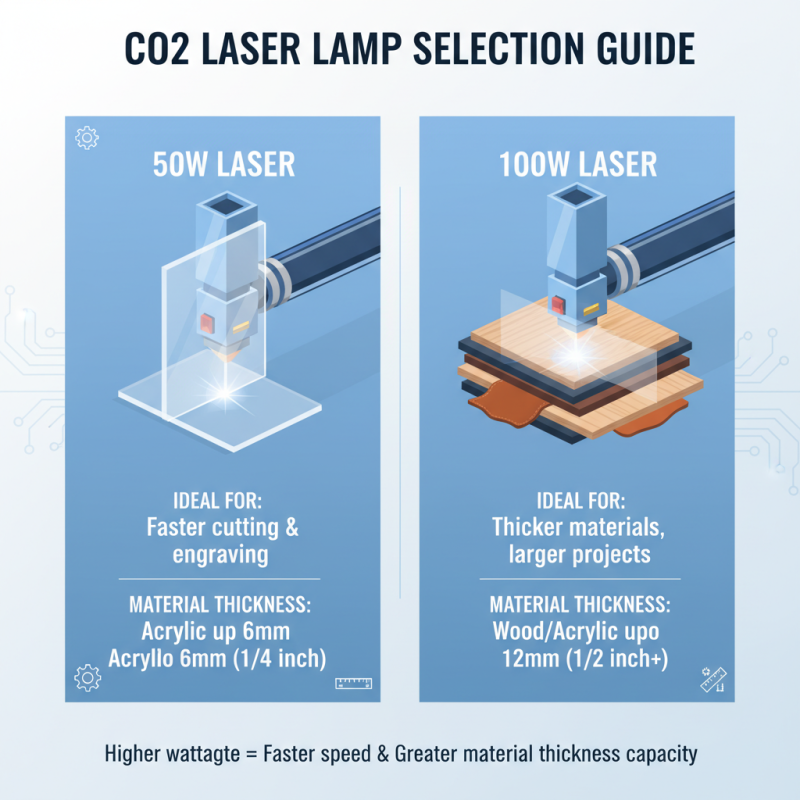
When selecting a CO2 laser lamp, certain factors are critical to ensure optimal performance. One important aspect is the wattage of the laser. Higher wattage typically allows for faster cutting and engraving speeds. Studies show that a 50W laser can cut through materials like acrylic up to 6mm thick effectively. In contrast, a 100W laser can handle thicker materials, making it suitable for more extensive projects.
Another key consideration is the focal length of the lens. A short focal length provides a narrow beam, producing highly detailed cuts. However, it may reduce efficiency on thicker materials. Research indicates that using a lens with a focal length of 2.5 inches can drastically improve engraving quality on wood. Users should also reflect on their specific project needs and whether details or speed are more essential.
Cooling systems are often overlooked but are crucial for maintaining performance. A well-functioning cooling system prolongs the life of the lamp and prevents overheating issues. Surveys in laser industries reveal that consistent cooling can enhance productivity by up to 30%. It’s wise to weigh these factors against your project requirements before making a decision. Understanding these considerations leads to better choices and outcomes in laser projects.
Different Types of CO2 Laser Lamps and Their Uses
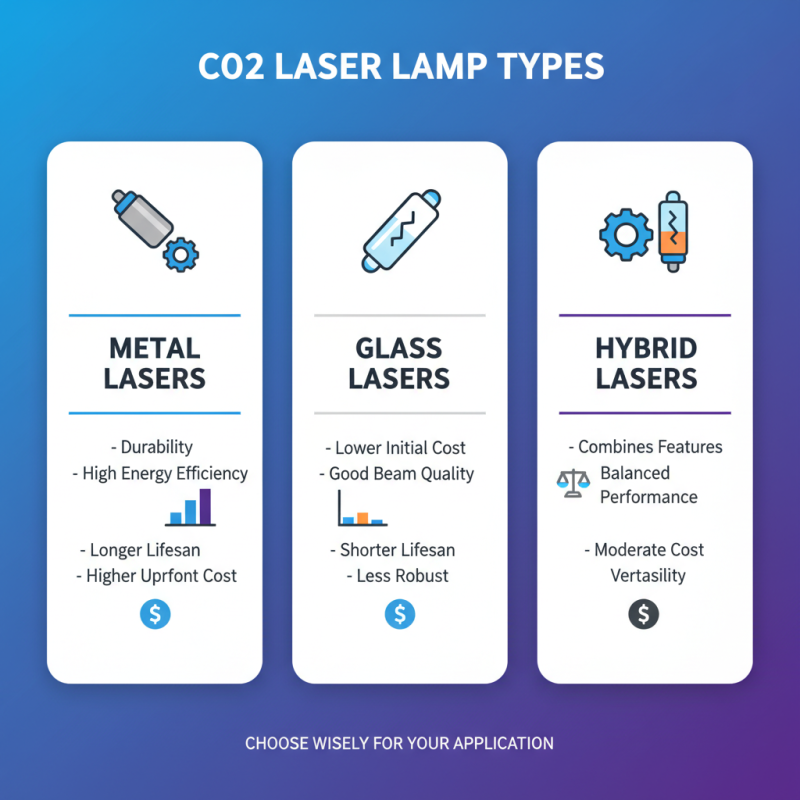
When selecting a CO2 laser lamp, understanding the different types is crucial. There are mainly three types: metal, glass, and hybrid lasers. Metal lasers offer durability and are known for high energy efficiency. They typically last longer than glass lamps. However, their upfront cost can be higher, making them a bigger investment.
Glass CO2 lasers are popular for small to medium projects. They produce high-quality cuts and engravings. Reports suggest they are effective for materials like wood and acrylic. Yet, they may not withstand heavy use as well as metal lasers. Hybrid models attempt to combine the best of both worlds. They might seem ideal but often struggle with consistency, especially in challenging environments.
In essence, the choice of CO2 laser lamp hinges on specific project needs. Knowing your material is vital; some lasers simply perform better with certain substrates. Even among experienced users, there can be confusion about wattage and performance. In fact, a study indicated that nearly 40% of users underutilize their laser’s capabilities. It’s essential to explore and experiment to truly harness the potential of your equipment.
Comparing Specifications and Features of CO2 Laser Lamps
When selecting a CO2 laser lamp, consider several key specifications and features.
Power is crucial. Higher wattage enables faster cutting and engraving.
However, it can lead to overburn issues on delicate materials. Not all projects require maximum power.
For intricate designs, a lower wattage might be sufficient.
Another important aspect is the size of the focal lens.
A larger lens allows for wider engraving areas, but sacrifices detail in fine work.
A smaller lens enhances precision but limits the operational range. Finding a balance is essential.
Look at the cooling system as well; some lasers come with advanced cooling for extended use.
Others may overheat, causing uneven results.
Lastly, explore the compatibility with various materials.
Some lamps handle wood and acrylic well, while others excel in fabric. Understanding your project's needs can save time and expenses.
Don’t forget to read reviews or seek advice from users. Every feature may not meet your expectation immediately.
It’s a learning process that can yield invaluable insights for future endeavors.
Budgeting for Your CO2 Laser Lamp: Cost vs. Quality
When budgeting for a CO2 laser lamp, it's essential to balance cost and quality. A cheaper lamp might save money initially, but it may not last long. Durability often correlates with better materials and technology. Consider your project needs before making a decision. It’s worth researching various options to understand the trade-offs.
Some users might prioritize features like power and speed. Others focus on how easy it is to maintain. A more expensive model might come with better customer support and warranties. These are crucial for long-term investment. Yet, you might find that not all high-priced options are worth it. Comparing features against your budget is vital.
Remember, spending doesn’t always equate to quality. Some users regret investing in lamps that overpromised. Reflection on past purchases is key. Take time to read reviews and gather insights from other users. It helps to make a more informed choice.
How to Choose the Best CO2 Laser Lamp for Your Projects? - Budgeting for Your CO2 Laser Lamp: Cost vs. Quality
| Lamp Type |
Wattage |
Price Range |
Lifespan (Hours) |
Application |
| Standard CO2 Lamp |
40W |
$150 - $300 |
2000 - 3000 |
Engraving Wood, Acrylic |
| High-Power CO2 Lamp |
60W |
$300 - $450 |
3000 - 5000 |
Cutting Thick Materials |
| Long-Life CO2 Lamp |
80W |
$500 - $700 |
5000 - 10000 |
Industrial Applications |
| Mini CO2 Lamp |
30W |
$100 - $200 |
1500 - 2500 |
Small Projects, Hobby Use |