Inquiry
Form loading...
Choosing a Blm Laser system is a capital decision, not just a machine comparison. Buyers need to match cutting capacity, material range, automation, service, and total ownership cost to real production needs. MarketsandMarkets’ Laser Cutting Machines Market report estimated the sector at USD 5.2 billion in 2023 and projected USD 6.8 billion by 2028. That growth signals expanding demand, but it does not guarantee that a particular machine will suit every factory.
Start with the parts you actually make. Record material grades, thicknesses, tolerances, daily output, and peak workloads. Then check the system’s process range, software, installation needs, training, spare-parts access, and support response times. Ask suppliers to demonstrate representative parts. Bring your own drawings. Inspect the cut edge.
Details matter.
Compare the full cost, not only the quoted machine price. Include maintenance, consumables, energy, downtime, and operator training. Quality expert W. Edwards Deming’s reminder, “In God we trust; all others must bring data,” is a useful procurement principle, though it is not a laser-industry quotation. Request documented performance data and written service commitments. A polished demonstration can hide a poor fit. So can a low price. These seven buying tips help global buyers ask sharper questions, compare offers consistently, and make a decision grounded in production evidence—not showroom impressions.
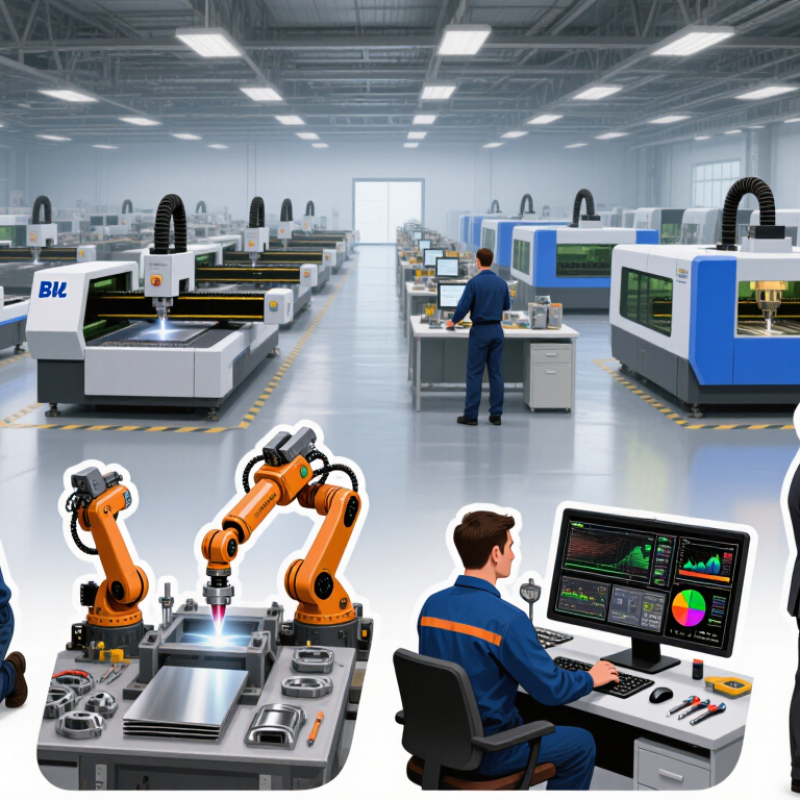
A laser system should fit the work you actually run, not an idealized production plan. List the materials, grades, thicknesses, and part dimensions you process most often. Include the occasional job, too; it may affect machine configuration. Record daily volumes, batch sizes, shift patterns, and required tolerances. A thick plate cut once a month should not dictate every purchasing decision.
Tip: Ask for a cutting trial using your own material and a representative part. Check edge quality, cycle time, and how loading, unloading, and changeovers affect the full job. Rated maximum speed alone can be misleading. Measure twice. Compare expected throughput with your real order mix, rather than assuming every shift runs continuously.
Capacity also depends on what happens around the laser. Review floor space, material storage, operator availability, and downstream handling before selecting a configuration. Confirm which material thicknesses the supplier can demonstrate reliably, and request written specifications for the proposed setup. If demand is likely to grow, estimate that growth—but leave room for uncertainty. Forecasts can be wrong, and an oversized system may add costs without improving delivery times. I would also verify maintenance access and local technical support; these details are easy to overlook during a machine demonstration.
| No. | Buying Tip | What to Define | Useful Data to Prepare | How to Verify |
|---|---|---|---|---|
| 1 | Map your production requirements | Identify the parts, cutting operations, and expected mix of work before comparing machine configurations. | List part drawings, process type (cutting, drilling, or both), order volumes, shift pattern, and expected production growth. | Ask for a trial using representative parts and compare cycle time, cut quality, and setup requirements with your targets. |
| 2 | Specify materials and grades | Confirm the exact metal types and grades the machine must process; cutting performance varies by material and thickness. | Record material grade, tube or profile dimensions, wall thickness range, surface condition, and whether materials are coated or reflective. | Provide samples or specifications for the materials you use most, and assess the resulting edge quality and process stability. |
| 3 | Match machine capacity to the workload | Choose capacity based on the required output and process mix, not on a single headline speed or maximum thickness claim. | Estimate required parts per shift, scheduled operating hours, average batch size, changeover time, and a practical allowance for maintenance. | Request cycle-time estimates for your actual part mix and check how loading, unloading, and changeovers affect total throughput. |
| 4 | Check the working range and profile compatibility | Confirm that the machine can accommodate the full range of tube shapes, lengths, diameters, and profiles used in production. | Prepare minimum and maximum dimensions, cross-section drawings, raw-stock length, finished-part length, and tolerance needs. | Verify supported shapes and dimensions against technical specifications, then test the most challenging profile in your range. |
| 5 | Evaluate automation and material handling | Decide whether manual loading is suitable or whether automated loading, unloading, or sorting is needed for the planned workflow. | Document stock length and weight, available floor space, operator availability, batch frequency, and connection requirements to nearby processes. | Review the complete material flow and confirm that the proposed automation matches your stock, layout, and production schedule. |
| 6 | Confirm software and factory integration | Make sure programming, file handling, and machine data fit your existing engineering and production processes. | List current CAD/CAM tools, common file formats, network requirements, user permissions, and any production reporting needs. | Test the workflow from drawing import to finished-part program, and clarify software training, updates, and support access. |
| 7 | Plan installation, service, and operating costs | Assess the full ownership requirements, including site readiness, operator training, maintenance, and regional service coverage. | Check electrical supply, compressed air and extraction needs, installation access, local safety rules, spare-parts availability, and warranty terms. | Request a written site-preparation checklist, commissioning scope, training plan, maintenance schedule, and itemized operating-cost assumptions. |
Capacity and cutting results depend on the machine configuration, material grade, dimensions, part geometry, and production workflow. Confirm performance with representative materials and parts.